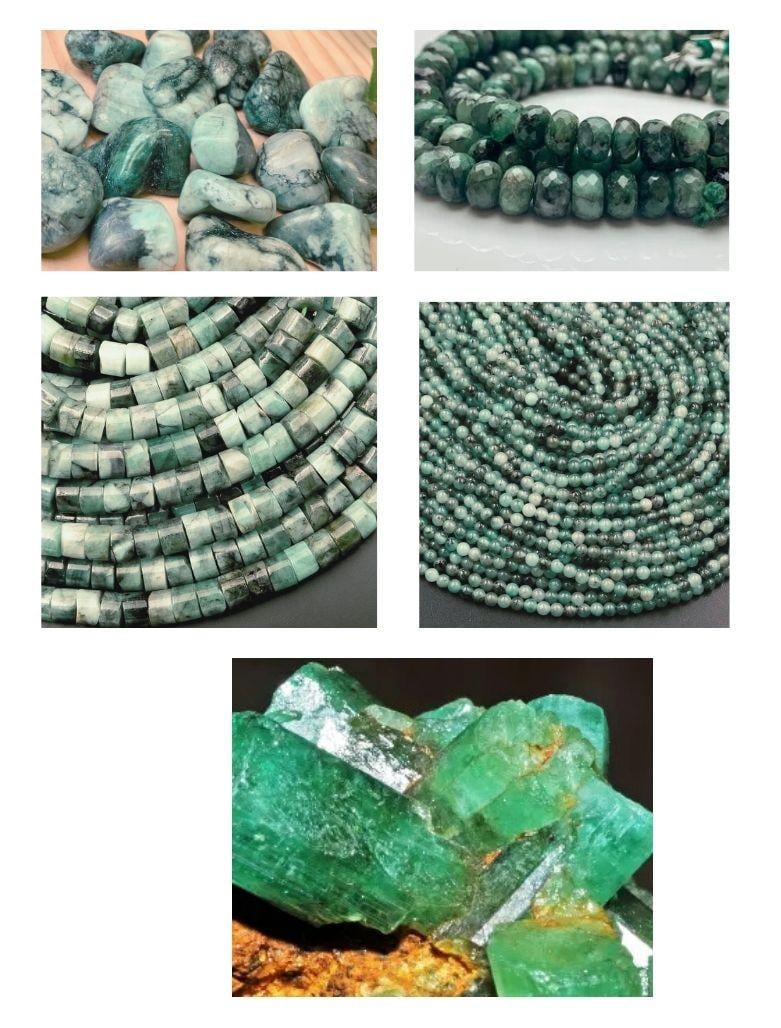
Emeralds belong to the Beryl family. They are a rich green color and found in igneous, metamorphic, and sedimentary rocks. They are highly desirable and have been so for 5,000 plus years. To be an Emerald the stone has to have a distinct green color that is from bluish green to slightly yellow green.And then we have Trapiche Emeralds. These are beautiful, very unique and rare. I have included a picture to show you it’s beauty. The Trapiche Emerald is found in just a few Colombian mines. The stone has a unique structure that looks like branches off a tree. The name is from the Spanish term trapiche. They were first described in 1879. Mohs Hardness of 7.5 to 8
Fluorite
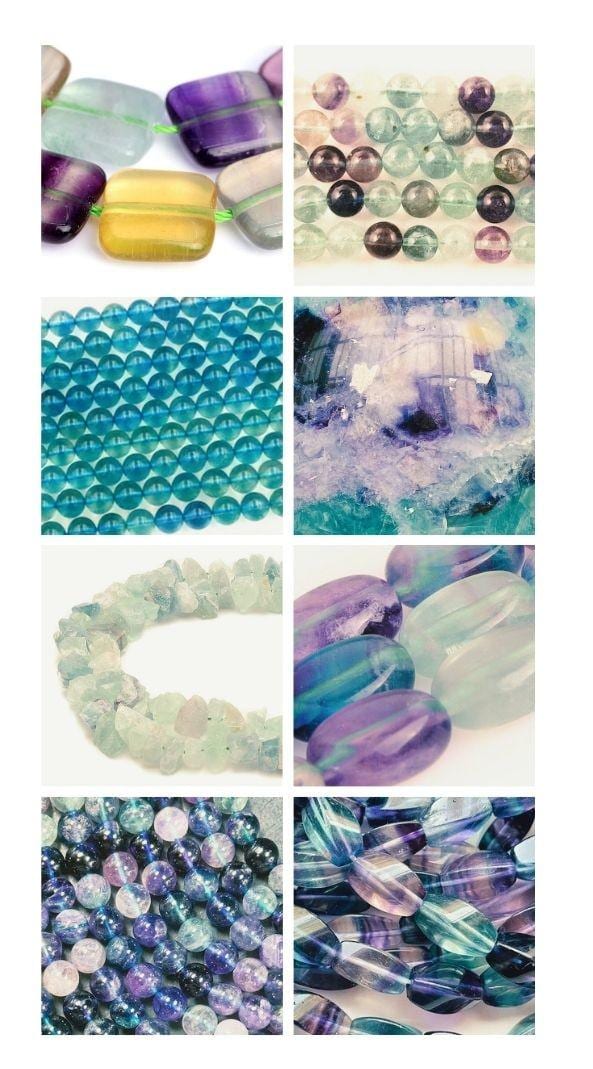
Fluorite is a mineral created of calcium and fluorine. The miner often call the rock, fluorspar. Fluorite occurs as a vein filling in rocks such as dolomites and limestones. The colors are amazing of blue, purple, green, yellow, red and even black. It is transparent to translucent. This rock is found in many parts of the world. Mohs Hardness 4
Garnet
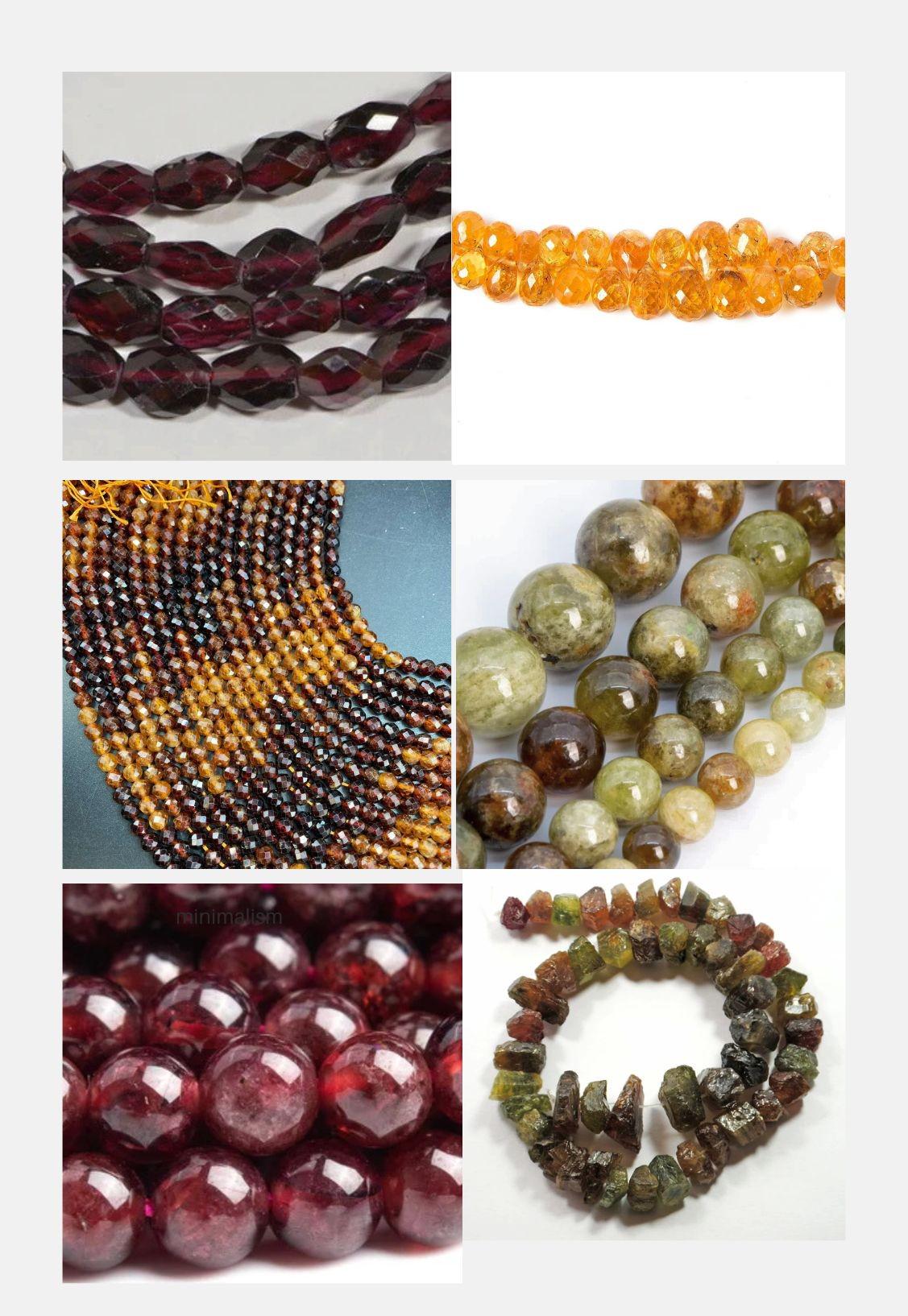
Garnet is found throughout the world. It is found in metamorphic, igneous and sedimentary rocks. Usually found near the surface. Garnet known for it's deep red color but it is also found in other colors such as orange, green, yellow, purple, black, or brown. Blue garnets are extremely rare. The colors depend on the minerals they find the Garnets in.Mineral
ColorsAlmandine red, brownPyrope red to purpleSpessartine orange to red to brownAndradite green, yellow, blackGrossular green, yellow, red, pink, clearUvarovite green
Mohs Hardness of 6.5 to 7.5
Gaspeite
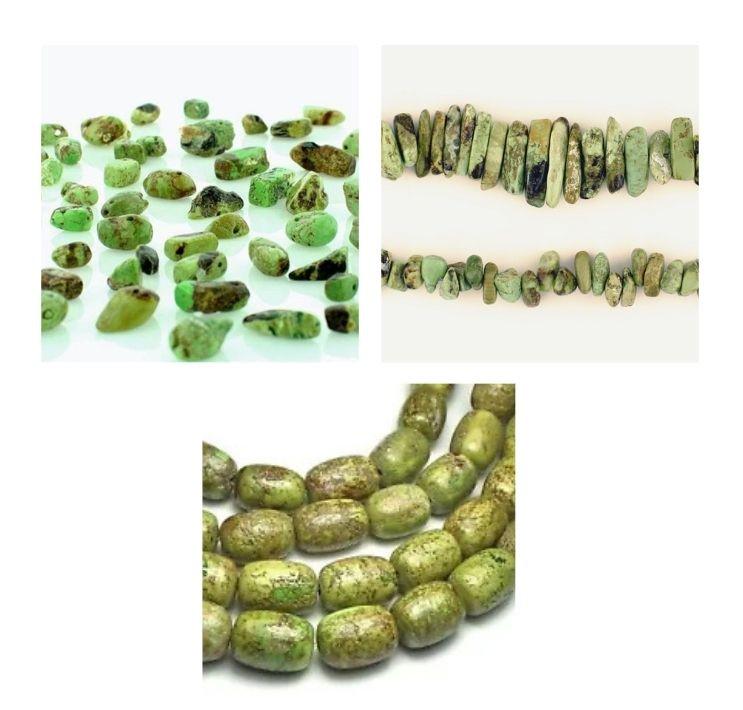
A rare nickel carbonate mineral also part of the Calcite mineral group. It got it's name from where it was discovered, Gaspe Peninsula of Quebec, Canada. It was first noticed and talked about in 1966. It has become very popular in the beading world. The colors are yellowish green to a bright green with many containing brown matrix. It has been found mostly in Quebec Canada, Western Australia, Japan and South Africa.Mohs Hardness of 4.5 to 5.0
Geodes
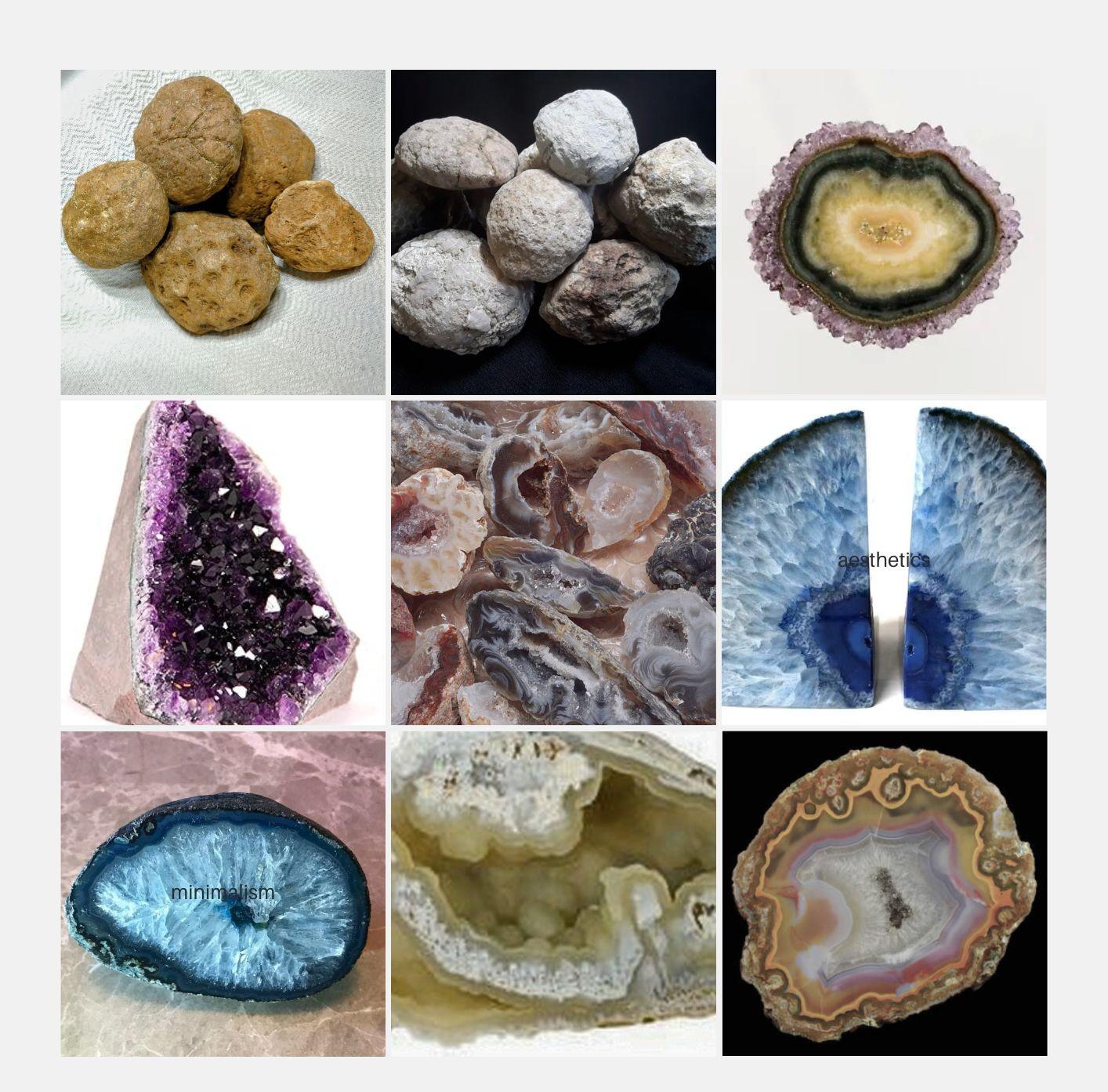
These are beautiful stones that look great in jewelry creations. They are so colorful and each is unique. The colors are spectacular. It amazes me that when they open an ordinary looking rock there is such beauty inside it. The mineral lining in the rock produces many unique color variations. Purple, gray, white, banded Agate, Rhodochrosite Opal and more. There are Geodes that are formed where there is volcanic activity, they can be filled with agate, opal, and quarts. Opening a stone with a Geode in it is like finding a hidden treasure. Then we have sedimentary Geodes. These form in limestones, calcareous shale and dolomite.
Mohs Hardness of 6.5 to 7.5
Hematite
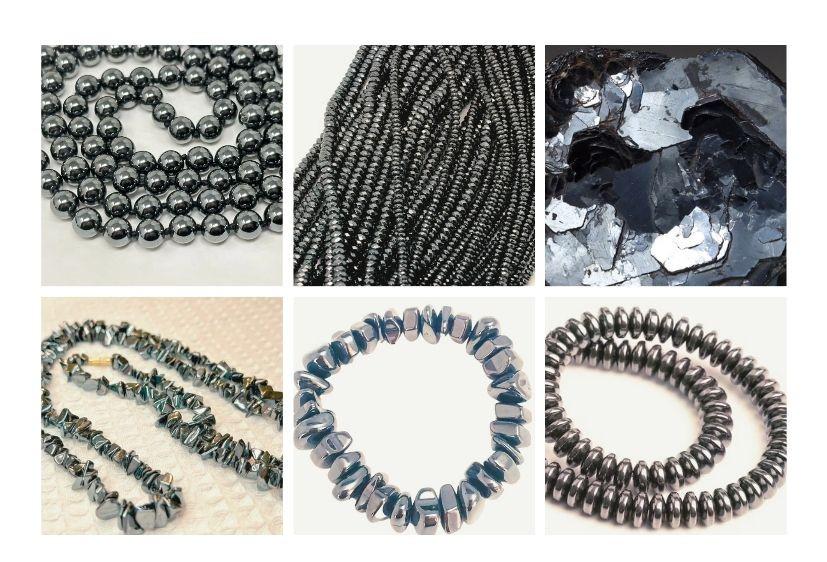
Found in sedimentary, metamorphic, and ingenious rocks. Its color ranges include red to brown and black to gray to silver. Hematite is a natural gemstone with highly affordable and common imitations. As a result, natural hematite is quite expensive, due to how inefficient it is to turn the material into gemstones. Natural hematite is not magnetic.
Hemalyke is a brand name for hematine, a manufactured material. ). This man-made material can be formed as a block, then cut like standard gemstones. . If it's magnetic, just assume it's a man-made. Not genuine.
Mohs Hardness of 5 to 6.5
Howlite
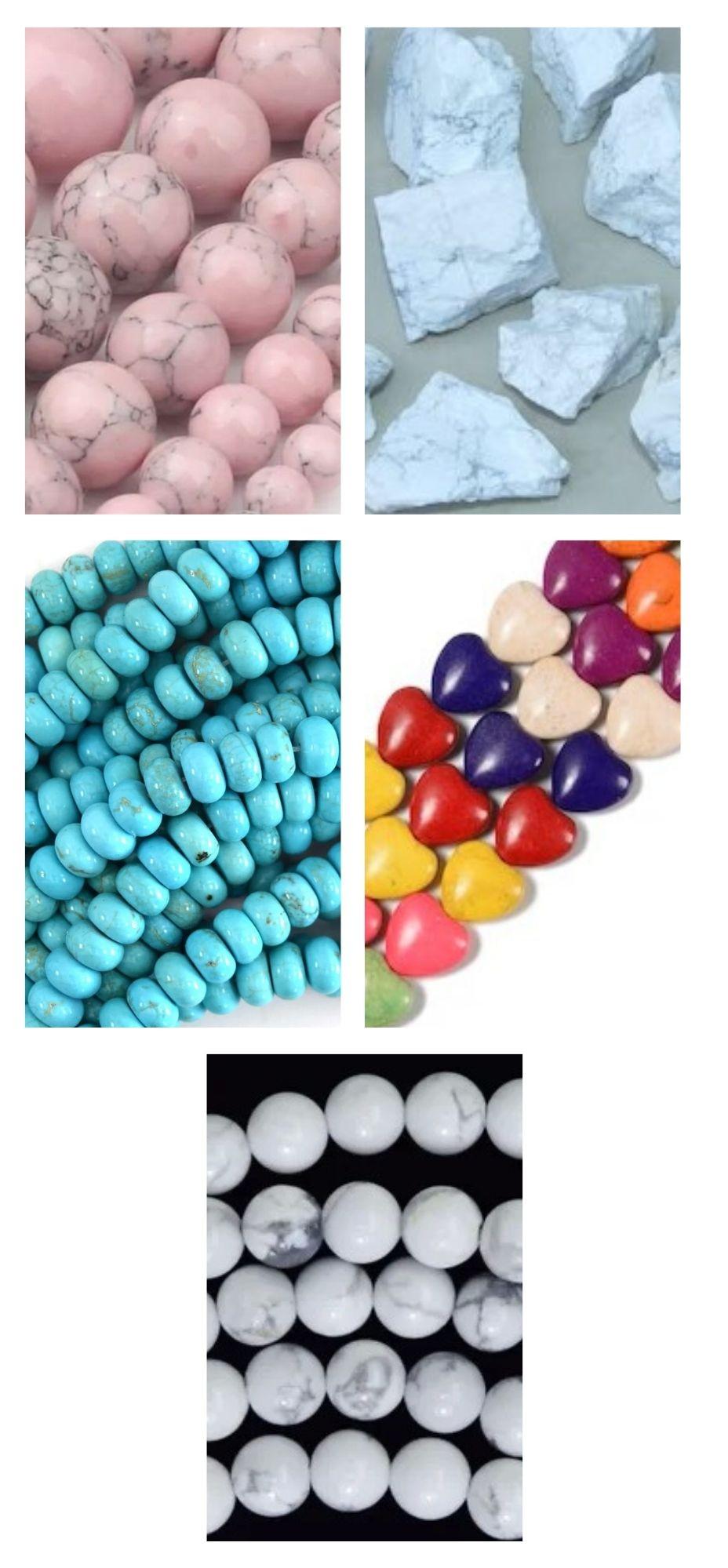
This rock was first discovered in Canada in 1868 by a Canadian chemist named Henry How. The name Howlite was given to this rock by James Dwight Dana shortly after it's discovery. A rock that is white with dark gray streaks running through it. Howlite is a borate mineral. Howlite in crystal form is rare and found only in a couple locations in the world. Howlite is often used to substitute more expensive rock turquoise. The turquoise dyed version is often sold under the name Turquenite also known as turquoise Howlite.
Mohs Hardness of 3.5
Iolite
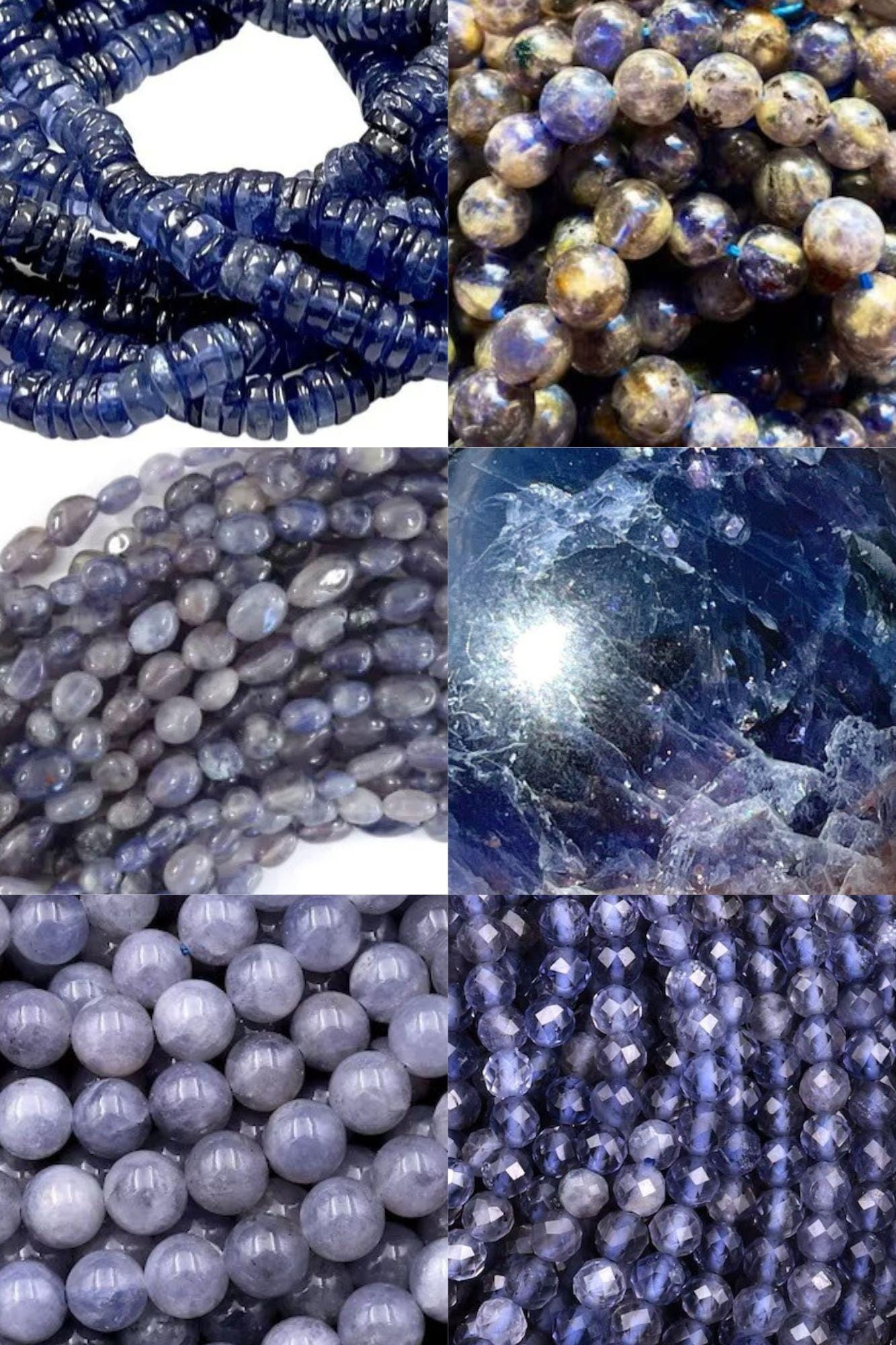
Iolite comes from the Greek word for violet and also the name dichroite which means two-colored rock. The official mineral name is cordierite. Interesting the rock has also been called water-sapphire. The stone is pale to dark blue, violet and colorless crystals as well as grey sometimes. The major source for this stone is Sri Lanka, India, Madagascar and Myanmar.
Mohs Hardness of 7 to 7.5
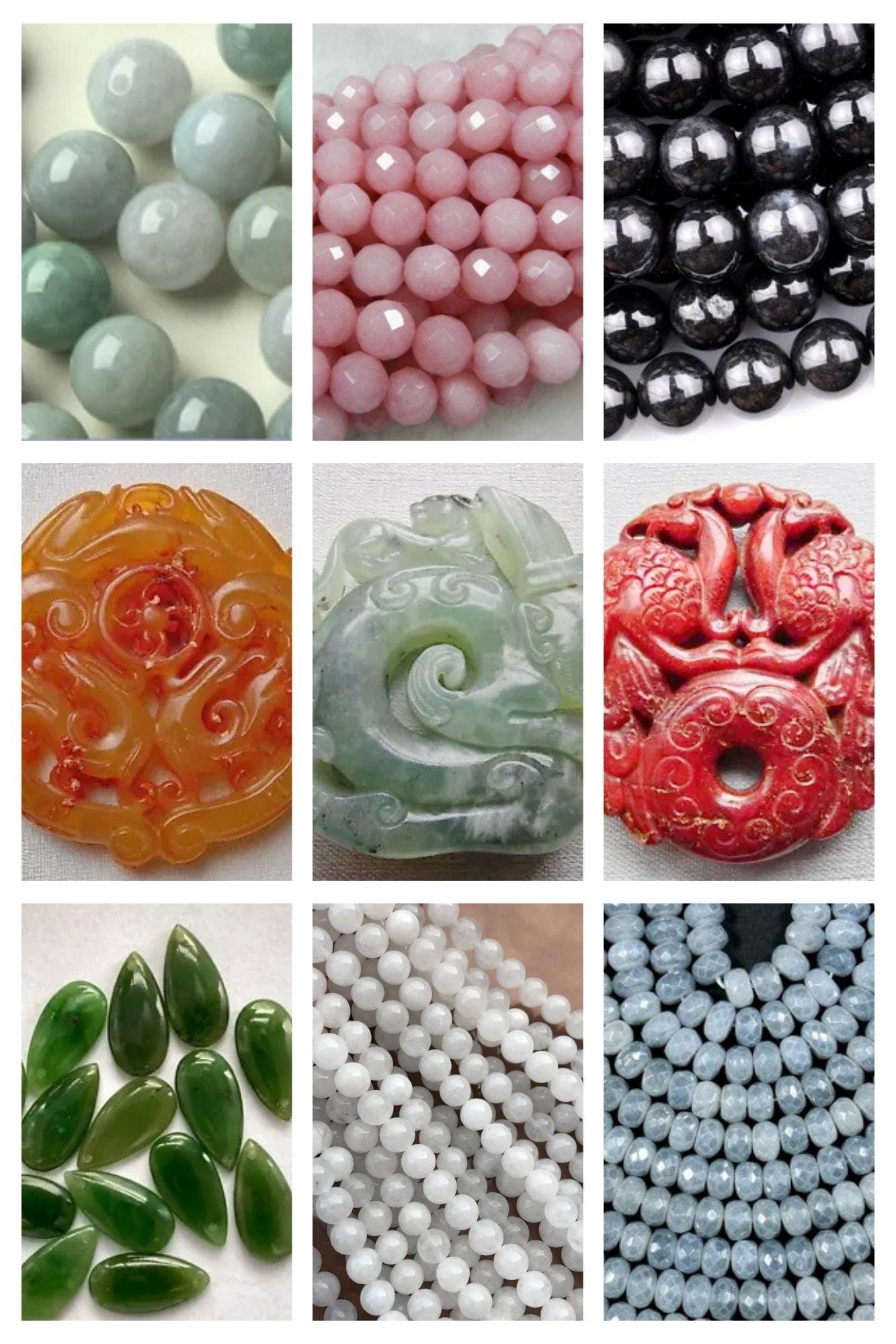
Jade
There are two different types of Jade, Jadeite and Nephrite. There chemical composition is different as well as their crystal structure. Nephrite: Colors of this type of Jade are mainly white, gray, dark green, reddish brown and black. Jadeite: Colors of this type of Jade are, green, yellow, black, white, lavender. There is so much information about Jade and those stones that look like Jade, I can not possibly put it all here.
Nephrite, Mohs Hardness of 6 to 6.5
Jadeite, Mohs Hardness of 6.5 to 7
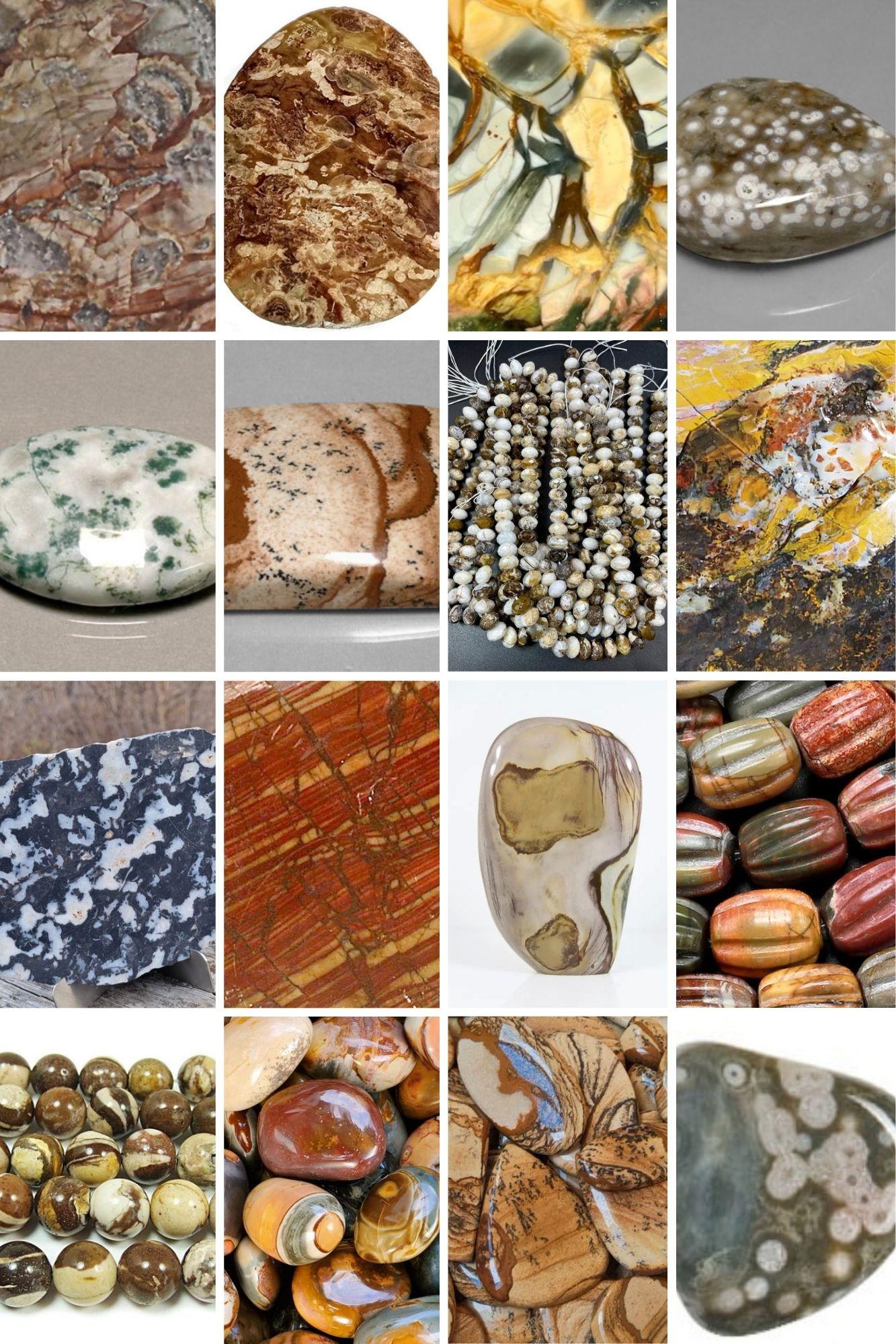
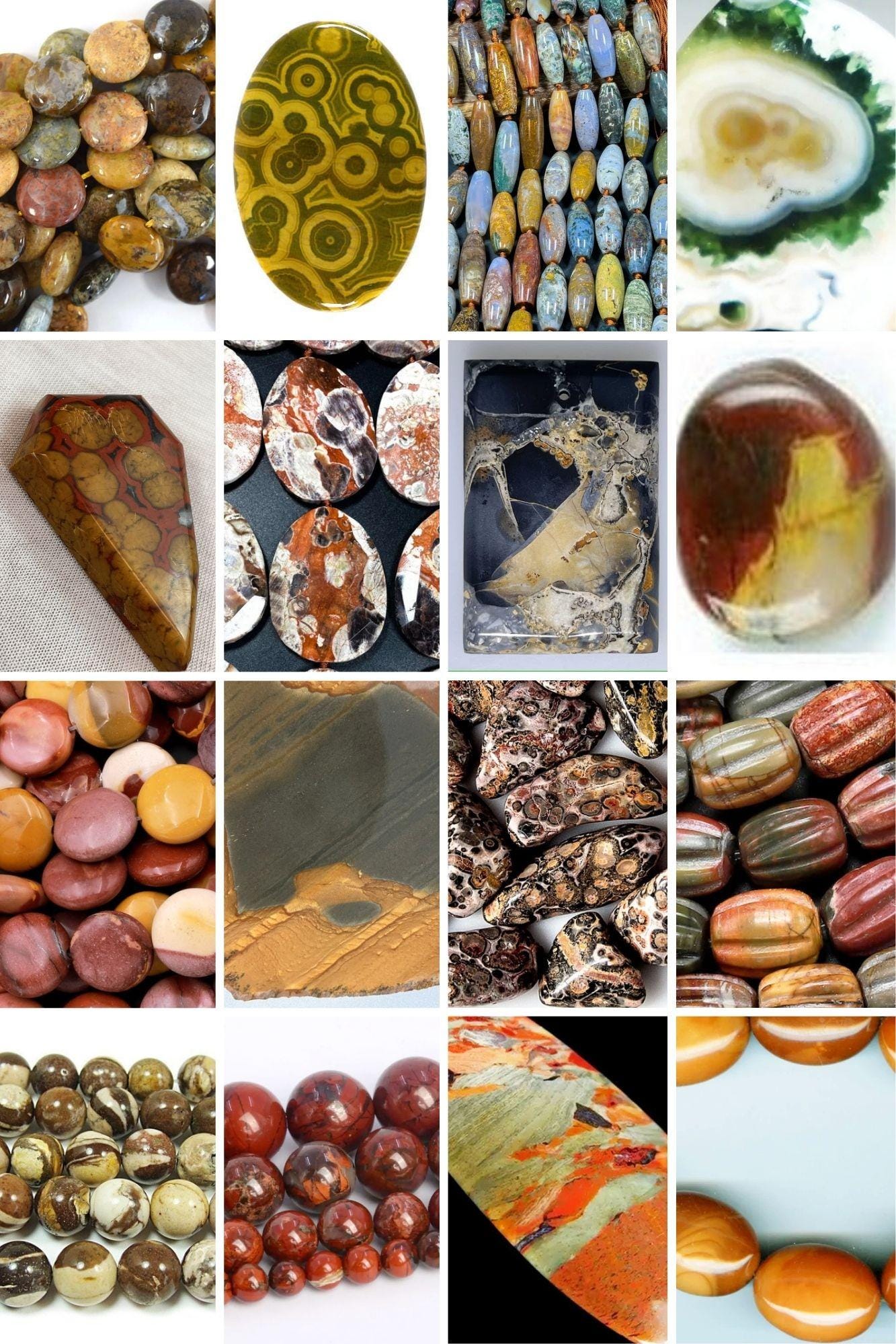
Jasper
Jasper is a variety of quartz that contains iron oxide. Jasper is harder than glass and is found in metamorphic rocks in mass or as distinct crystals. There are numerous colors associated with this stone, brown, yellow, reddish brown, red, mottled green, black, orange, green, and the patterns are as numerous.
The stone is mentioned in the Bible at Revelation 21:11 and is called a most precious stone. Itis also mentioned in Exodus 28:2,15,18,21; 39:11 and was placed on Aaron's "breast piece of judgment."
The stone can be solid or have unique patterns. This stone is very appealing to many people, the patterns are so beautiful in some of them they call some of the stones Picture Jasper. It is an affordable stone that is used in creating many things, a lot of jewelry uses these stones because of the vast variety it offers.
There are so many names that the retail market sells these stones under. The word Jasper means spotted or speckled stone. The stone is hard and accepts a polish very well, making it popular for many years.
African Jasper - with its dark hues
Agate Jasper - Opaque multi-colored Jasper, or Jasper with banding.
Biggs Jasper - Jasper from Biggs Junction, Oregon, muted gold, brown and ebony almost wooden-looking colors.
Brazilian Jasper - with its green patches
Brecciated Jasper - Jasper in rounded fragments naturally cemented together in a gray material; appears similar to breccia.
Bruneau Jasper - Jasper from Bruneau Canyon, in Owyhee County, Idaho, caramel and cream layers of banding and patterns.
Cave Creek Jasper - Reddish Jasper found near Cave Creek in Maricopa County, Arizona.
Dendritic Jasper - with feathery patterns formed by ancient sea creatures
Deschutes Jasper - Jasper from a deposit slightly east of Biggs Junction, Oregon, near the Deschutes River, with good banding and interesting color formations.
Egyptian Jasper - Form of Orbicular Jasper with white and gray circles on a red background. It is found as rounded pebbles on the beaches of Egypt. A similar Jasper is found on the beaches of Washington state and sometimes also labelled as Egyptian Jasper.
Flame Jasper - with its swirls of red and orange
Green Jasper - Jasper with a light to dark green color. Green Jasper differs from Prase and Plasma since it is fully opaque.
Jaspilite - Banded rock that is a mixture of Hematite and Jasper.
Kinradite - Orbicular Jasper with concentric rings of colorless or white Quartz. Occasionally used as a synonym of Jasper.
Leopard Jasper - Form of Orbicular Jasper with tan color rings, appearing similar to the spots of a leopard.
Morgan Hill Jasper - Jasper from Morgan Hill, California, with small reddish and yellow "poppy" formations. Also synonymous with "Poppy Jasper".
Morrisonite - Multi-colored Jasper from the Owyhee River gorge in Malheur Co., Oregon.
Moss Jasper - Form of Jasper or Chalcedony containing dense inclusions of green Hornblende that cause the pattern to resemble moss. Often used as a synonym for Moss Agate, though Moss Agate is translucent whereas Moss Jasper is opaque.
Mushroom Jasper - Mushroom Jasper is a picturesque stone also known as Mushroom Rhyolite. Found in Phoenix, Arizona. As you can see in the pictures it has unique and interesting patterns in the stones. It can be polished nicely. Often it has formations of quartz and agate found in them. Mohs scale of hardness is 6½ - 7.
Ocean Jasper - Form of Orbicular Jasper found on the coast of Madagascar with small, tight, concentric ring formations.
Opal Jasper - Form of Brecciated Jasper in which the cementing material is Opal.
Orbicular Jasper - Jasper with rounded concentric rings.
Owyhee Jasper - Form of Jasper with scenic picture resembling deserts and skies, found near the Owyhee River in Oregon.
Picture Jasper - Form of Jasper with scenic picture-like formations.
Poppy Jasper - Form of yellow Orbicular Jasper with red concentric rings.
Riband Jasper - Jasper with banded stripes, usually dark red, brown, yellow, or white bands.
Ribbon Jasper - Form of Banded Jasper with thick banded lines.
Rogueite - Green form of Jasper from the Rogue River in Oregon.
Russian Jasper - Jasper from Russia, often with reddish spots.
Stone Canyon Jasper - Yellowish Brecciated Jasper from Stone Canyon, California.
Wascoite - Jasper from Wasco Co., Oregon, with irregular yellow, pink, and red concentric bands.
Zebra Jasper - Dark brown Jasper with lighter brown to white colored banding streaks.
There are a few varieties of stone that are called Jasper. This is a common misnomer, Dalmation Jasper and Bumblebee Jasper are not Jasper at all. This Jasper stone is common and found throughout the world. India, Russia, Kazakhstan, Indonesia, Egypt, Madagascar, Australia, Brazil, Venezuela, Uruguay and the United States (Oregon, Idaho, Washington, California, Arizona, Utah, Arkansas, and Texas).
Mohs Hardness of 7
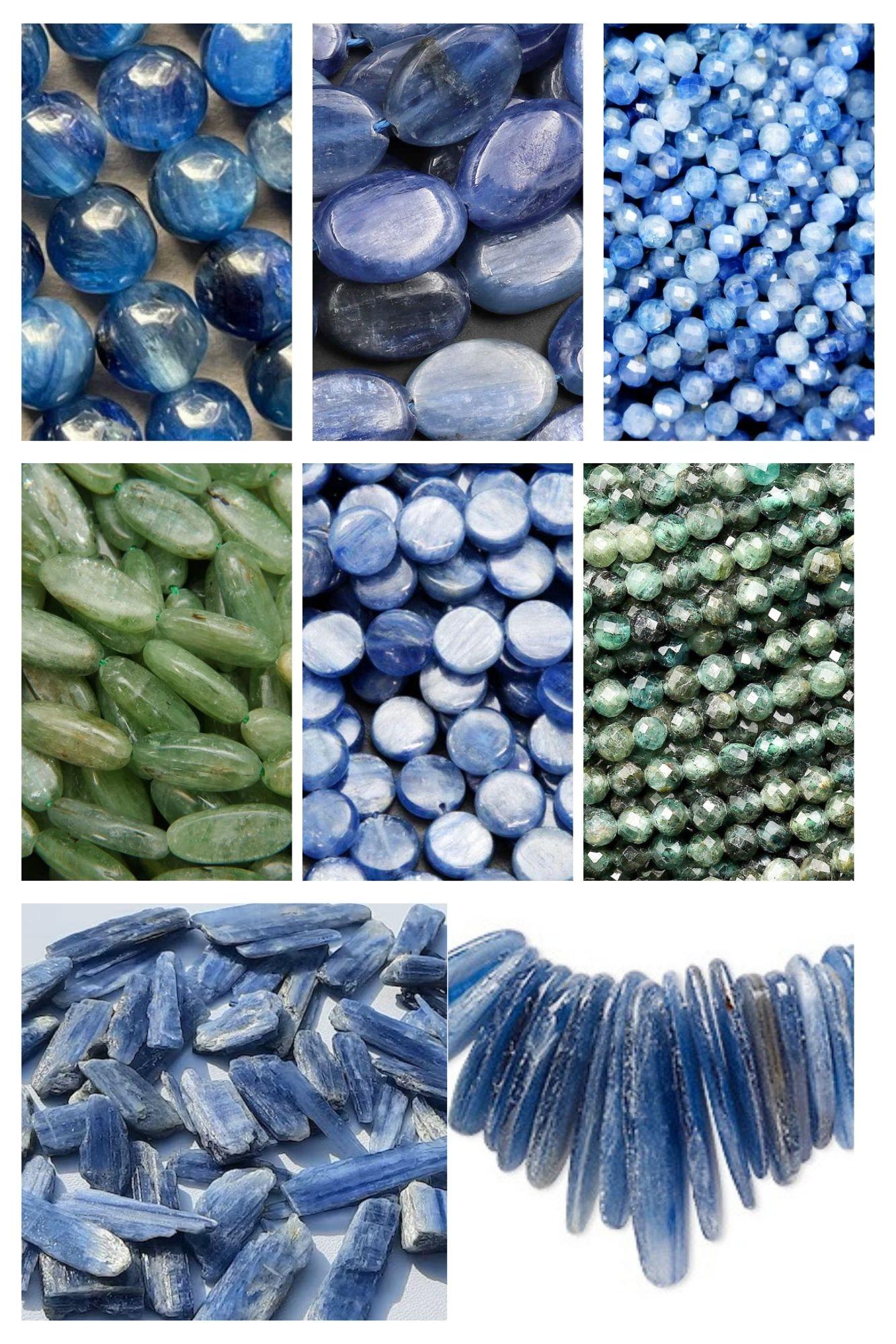
Kyanite
This is a beautiful blue or green stone that consist of aluminum silicate. The stone was named by Abraham Werner in 1789. Interestingly this stone is used in so many ways, head-resistant ceramics, insulators and abrasives, that is when it is not in gemstone form of course. In a jewelry setting it is stunning. The name of this stone is derived from the Greek word the Ancient Greek word κύανος. This is generally rendered into English as kyanos or kuanos and means "dark blue Kyanos. However this stone can also come in several other colors; gray, orange, yellow and white.
Depending on how it is cut the Mohs hardness scale ranges from 4 to 4.5 when cut parallel to it's long axis, when cut perpendicular it hardness can range from 6 to 7.
This stone is found in several locations around the world. Austria, Burma, Brazil, India, Kenya, Cambodia, Nepal, Russian, Switzerland and the USA to name some. Orange kyanite was recently discovered in Tanzania