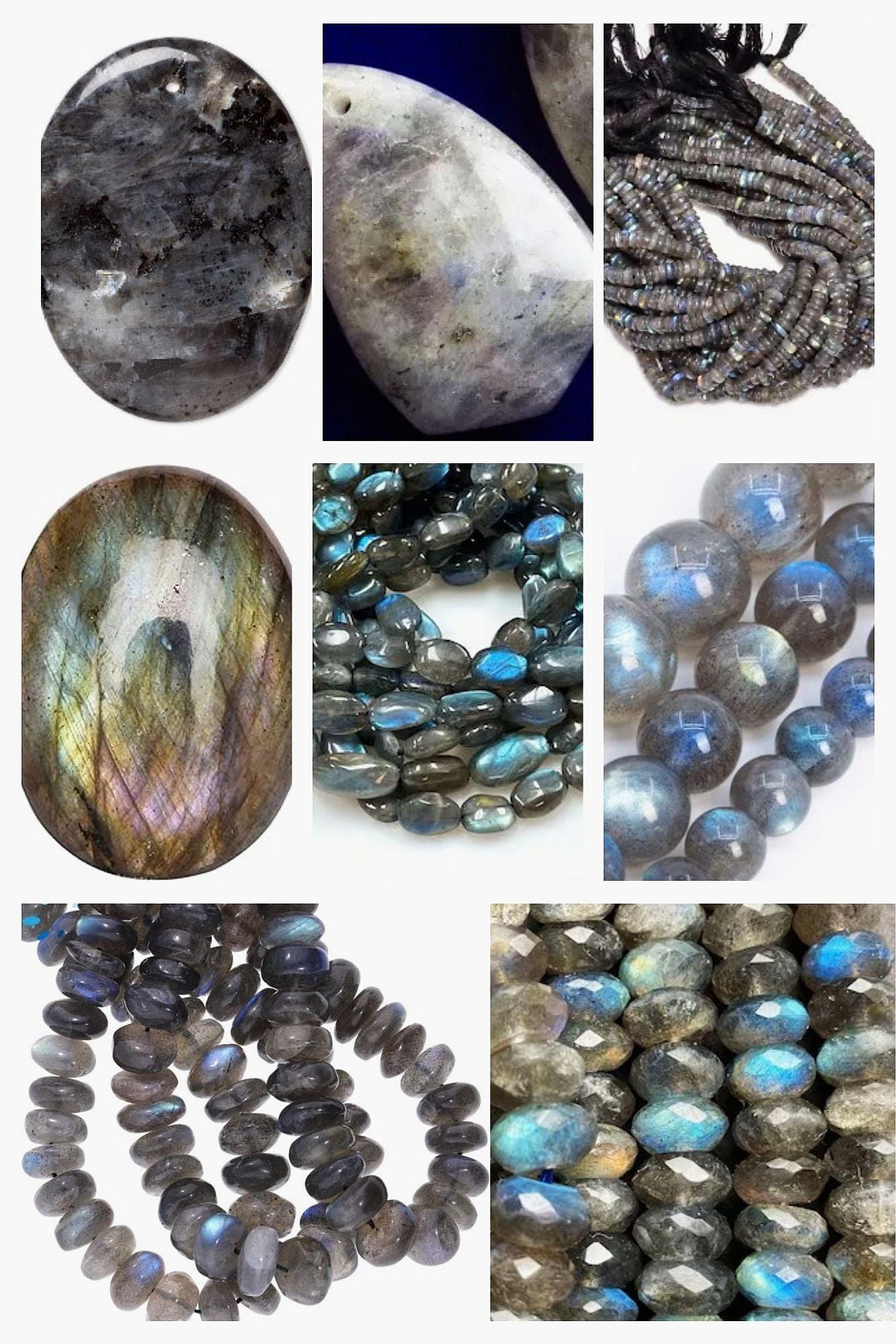
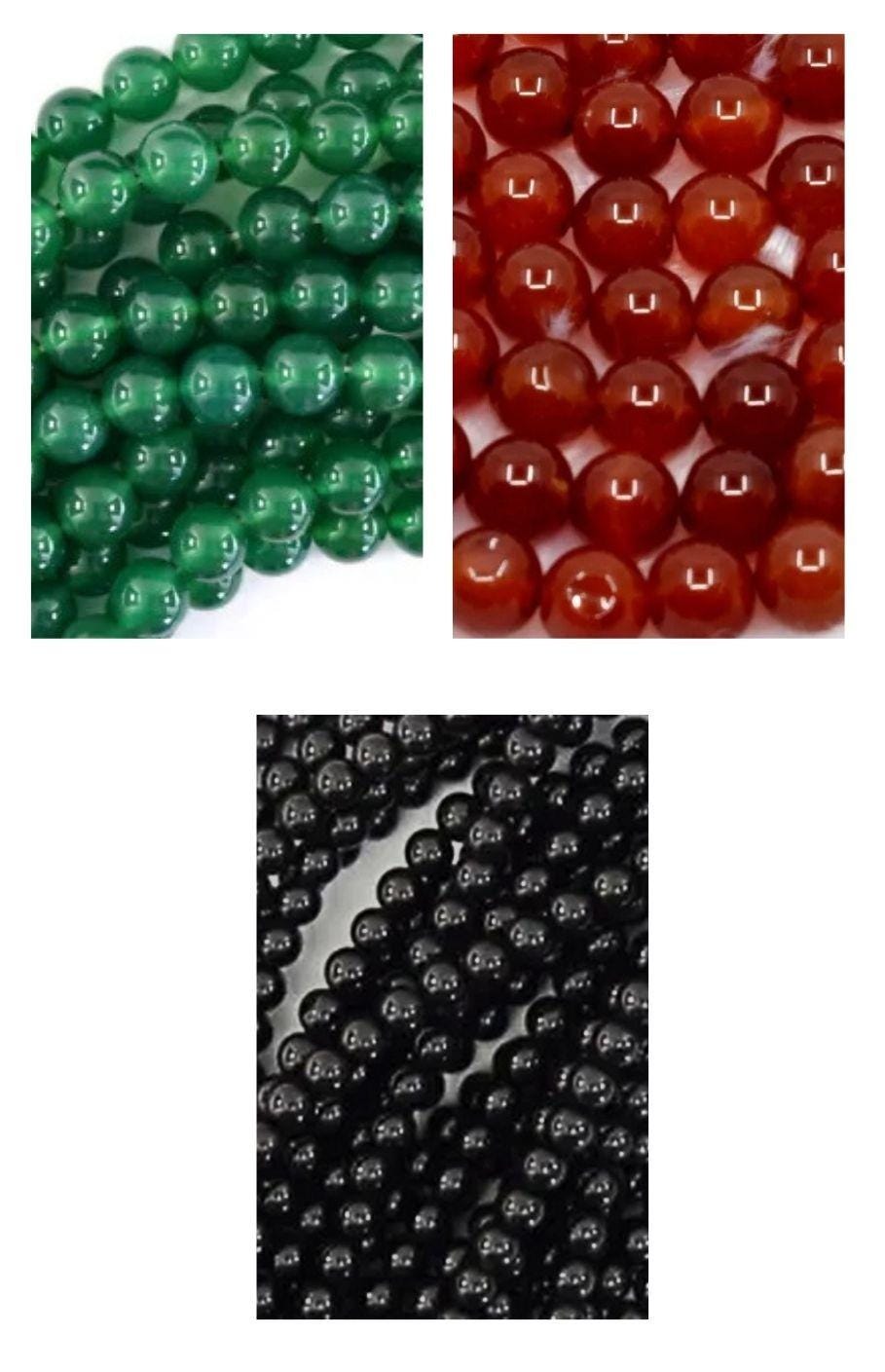
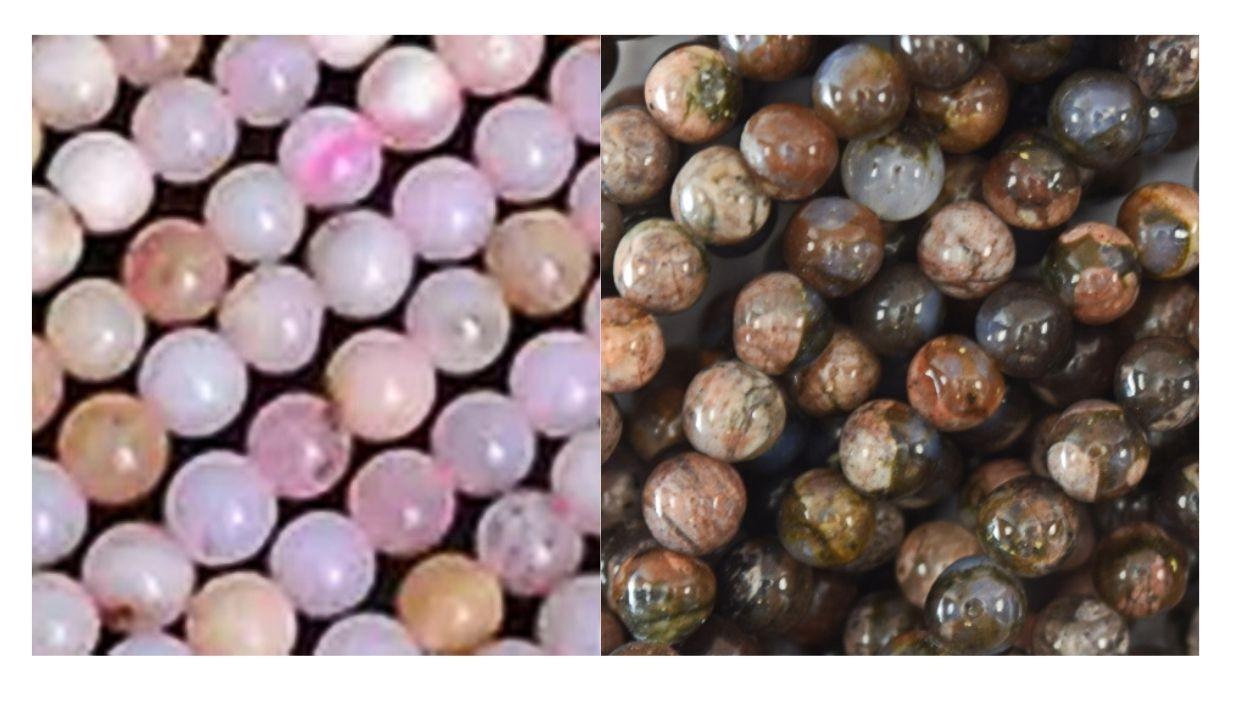
This stone is a feldspar mineral. While the most commonly found colors of these stones are white and grey, labradorite stones in blue, green, yellow and brown hues have been found too. These are beautiful iridescent gemstones that usually have a dark base color with metallic-looking color plays of blue, green, yellow, and red. This iridescent effect is usually known as labradorescence. Labradorite is not exclusive to Canada however, and can also be found in Mexico, Russia and Finland.
Mohs Hardness 6 - 6.5
Lapis Lazuli
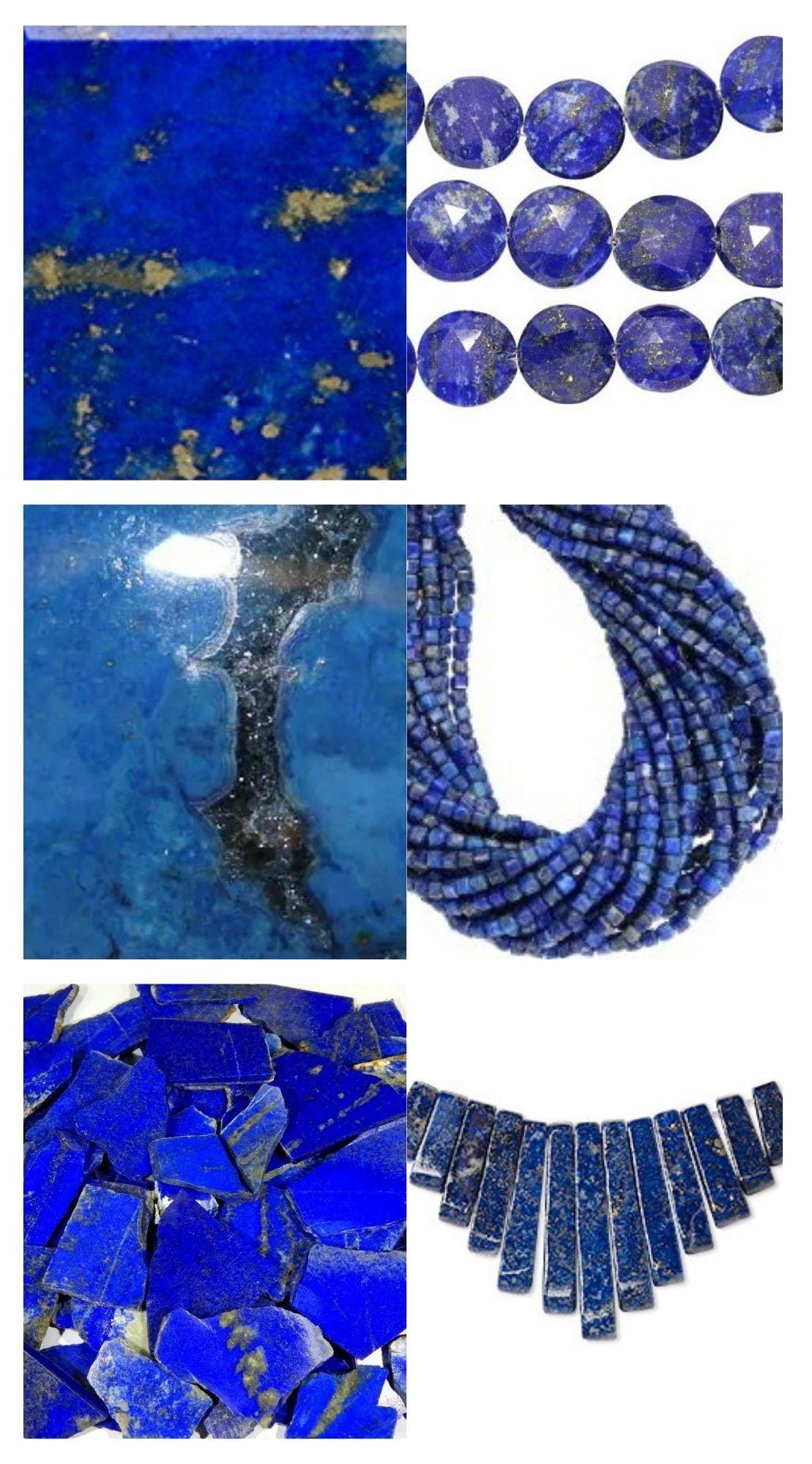
This is a beautiful and prized stone. The deep-blue metamorphic rock has been prized since ancient times. It's predominant use in in jewelry today. Used in ancient times it is still very prized today, in the middle ages the rock began to be exported to Europe. It is said that it was ground into powder and made into ultramarine. Ultramarine was used by artists of the Renaissance and Baroque time.
Mohs Hardness of 5-6
Lepidolite
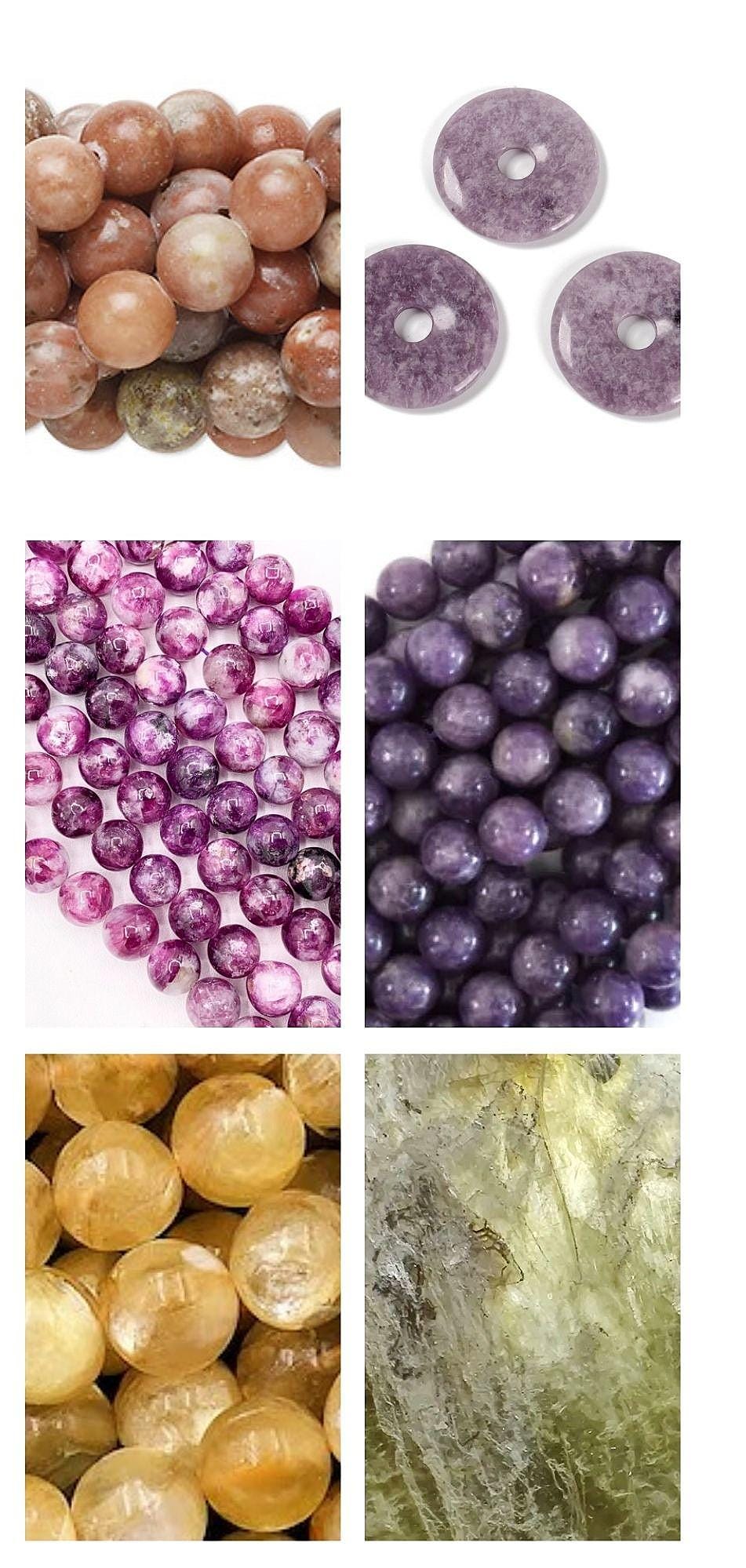
Discover the beautiful, rare gem of Lepidolite! With its stunning pink, red, and purple hues, it not only serves as a minor ore of lithium but also makes a great gemstone when impregnated with quartz. Its gentle hardness of 2.5-3 Mohs provides durability while adding a touch of color to any collection. Luh-PI-duh-lite has never been so alluring!
Pink to purple, also lesser-common rose-red, violet-gray, yellowish, white, colorless
Lepidolite is a key component in the creation of stunning “aventurine” quartz gems. With its unique shimmer and shades of pink, red, and purple, lepidolite adds a touch of beauty to any piece. Even a small percentage of lepidolite flakes can result in a noticeable color change in aventurine.
Malachite
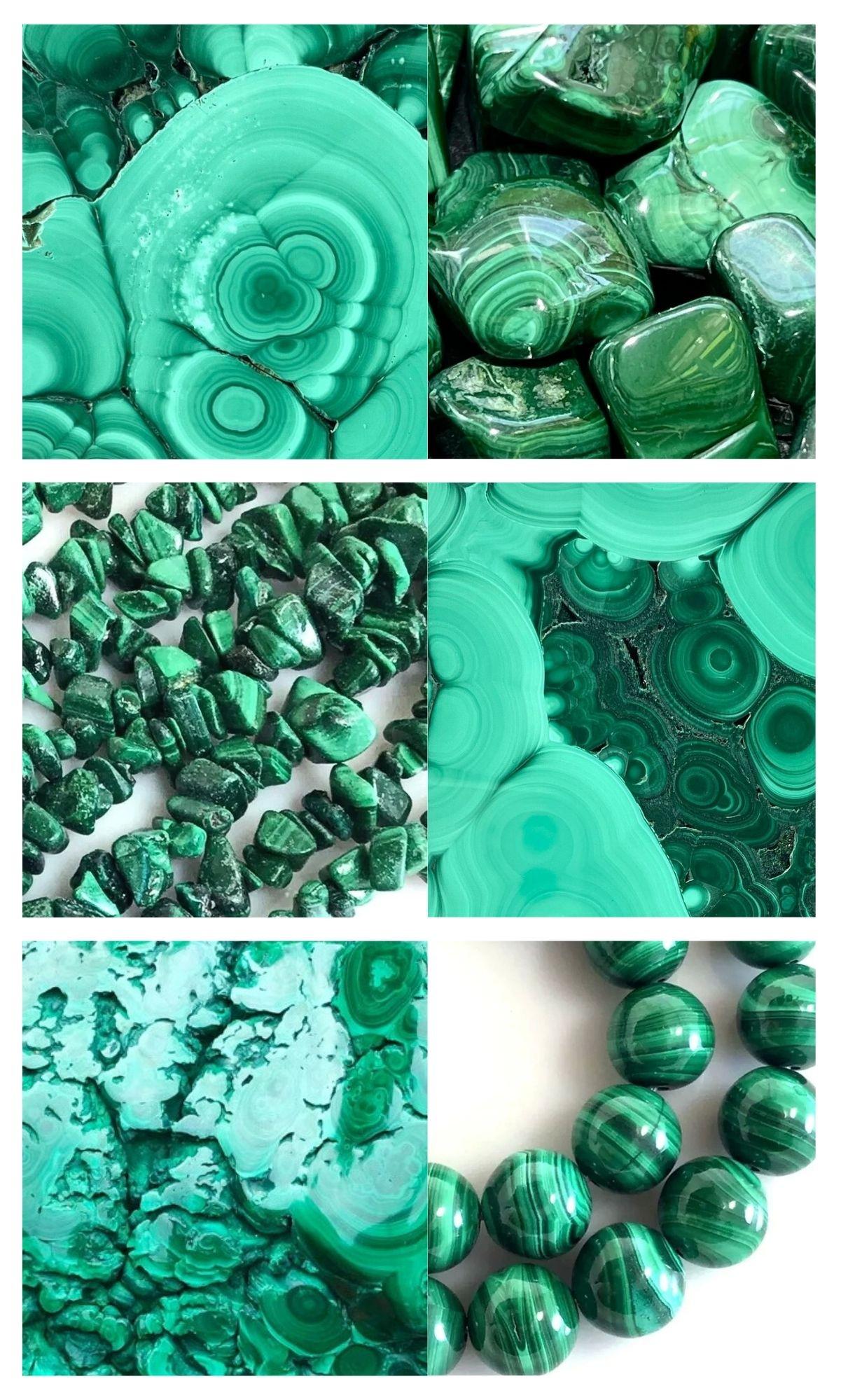
Experience the rich and vibrant beauty of Malachite, the gemstone that gets its stunning green hue from copper. With a copper content of 58%, Malachite is a minor copper ore that is often found in copper mining deposits.Discover the stunning beauty of Malachite, formed through natural processes that create its unique swirling patterns. These bands reflect the changes in chemical solutions, resulting in a mesmerizing microcrystalline aggregate. Occuring usually in massive form or as a crust on other rocks, experience the wonder of Malachite for yourself.
Discover the key features of real malachite and how to spot fake ones. Natural malachite boasts predominantly linear and circular ring features, while imitation malachite has more swirling due to its resin composition. Look out for bold black lines and exaggerated swirling, as these are generally signs of imitation. Not that it is a bad thing to have imitation malachite it should just be priced accordingly.
Mookaite
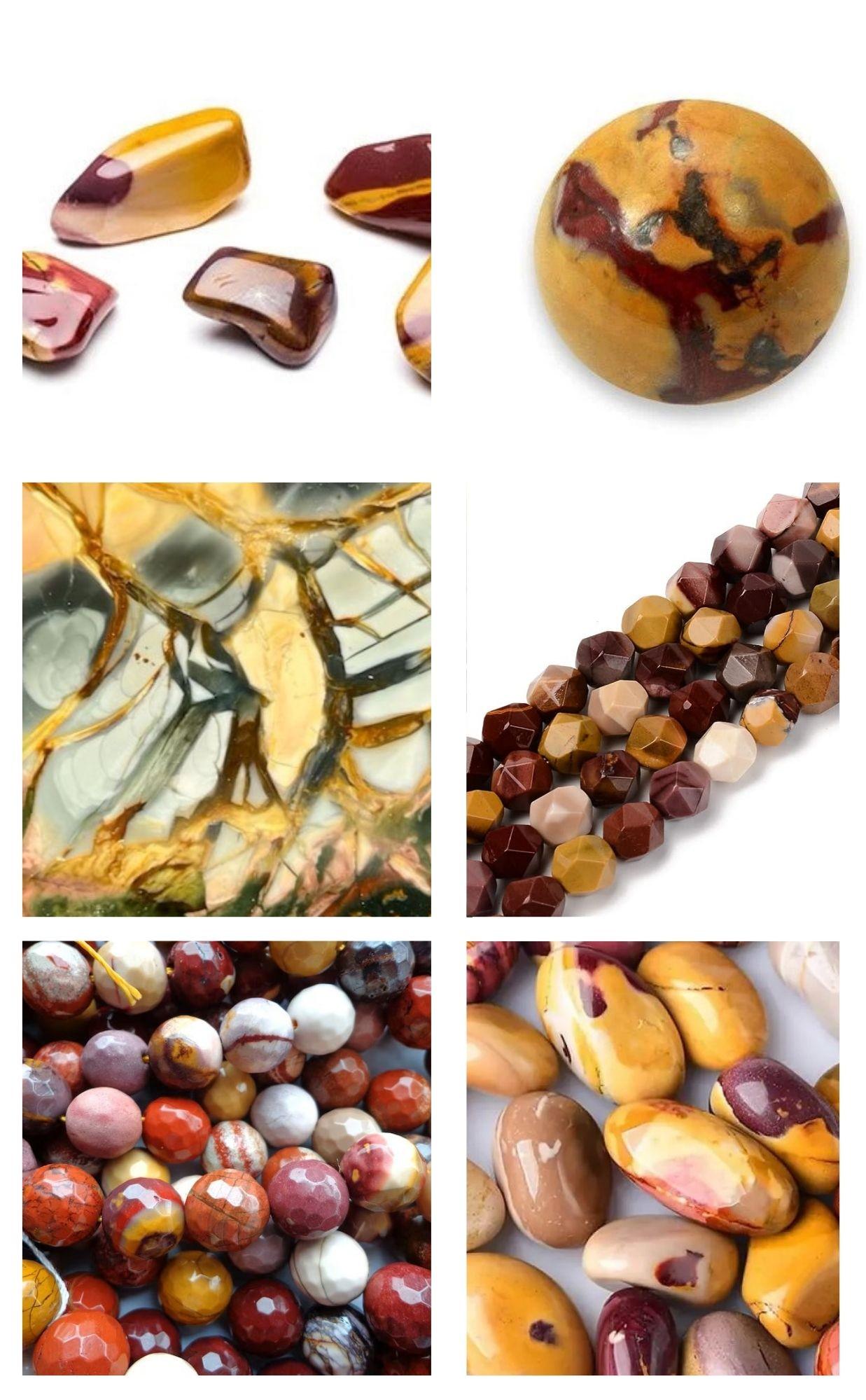
A stone found in the Australian outback. This is part of the Jasper family. Its deep red and yellow colors symbolize our connection to nature and ancient ancestors. Its name comes from Mooka Creek.
This stone's softness enables easy carving and shaping, while its unique color variations of reddish-brown, yellow, orange, pink, and purple add character to any project. The glossy or silky finish adds a touch of elegance.
Moonstone
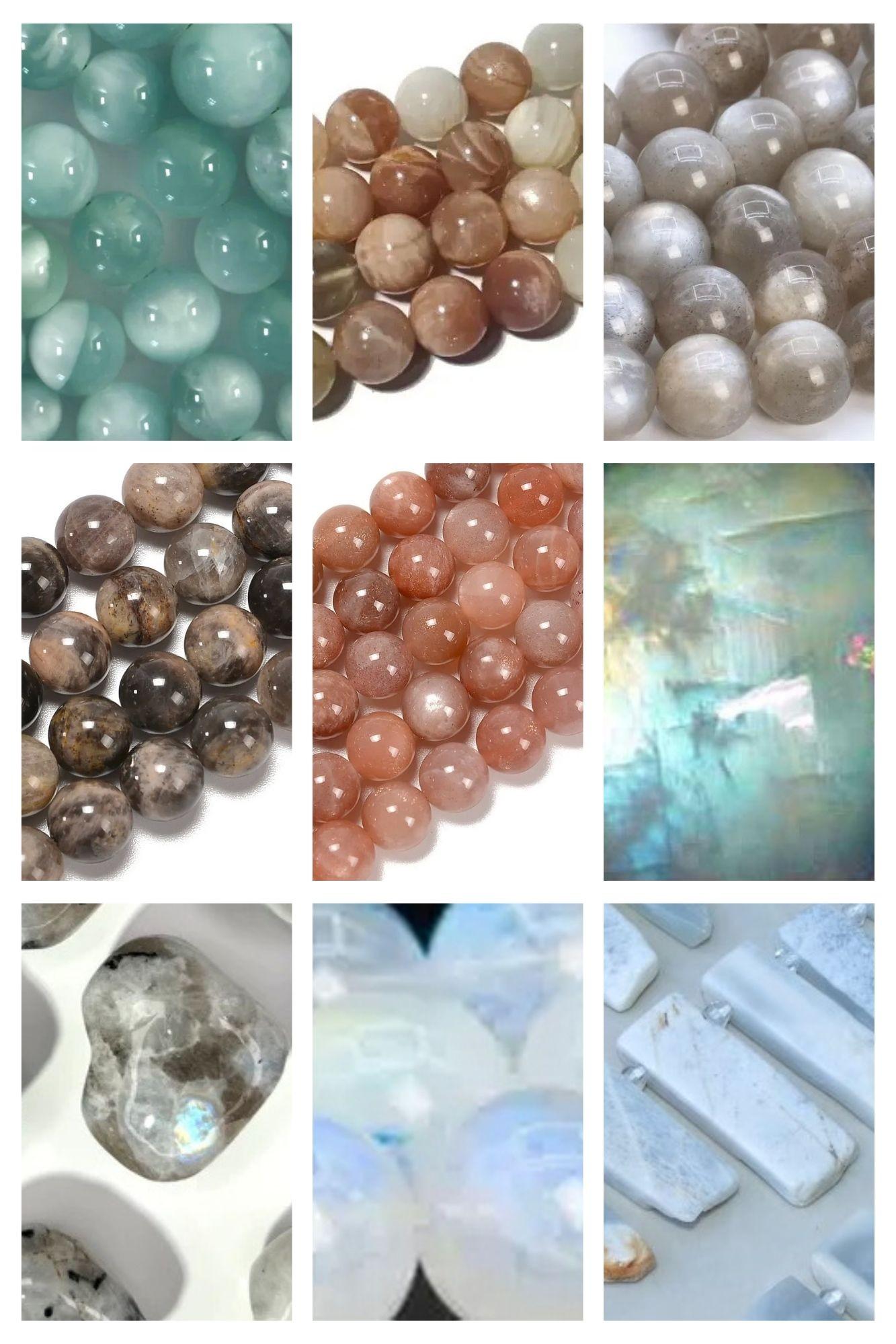
Moonstones are unmistakable with their characteristic fissure systems, resembling "centipedes" under a microscope, and rectangular dark areas, created by exsolution pressures. Myanmar moonstones have additional needle inclusions, making them truly unique. A must-have for gem collectors and enthusiasts who appreciate natural formations.
Mother of Pearl
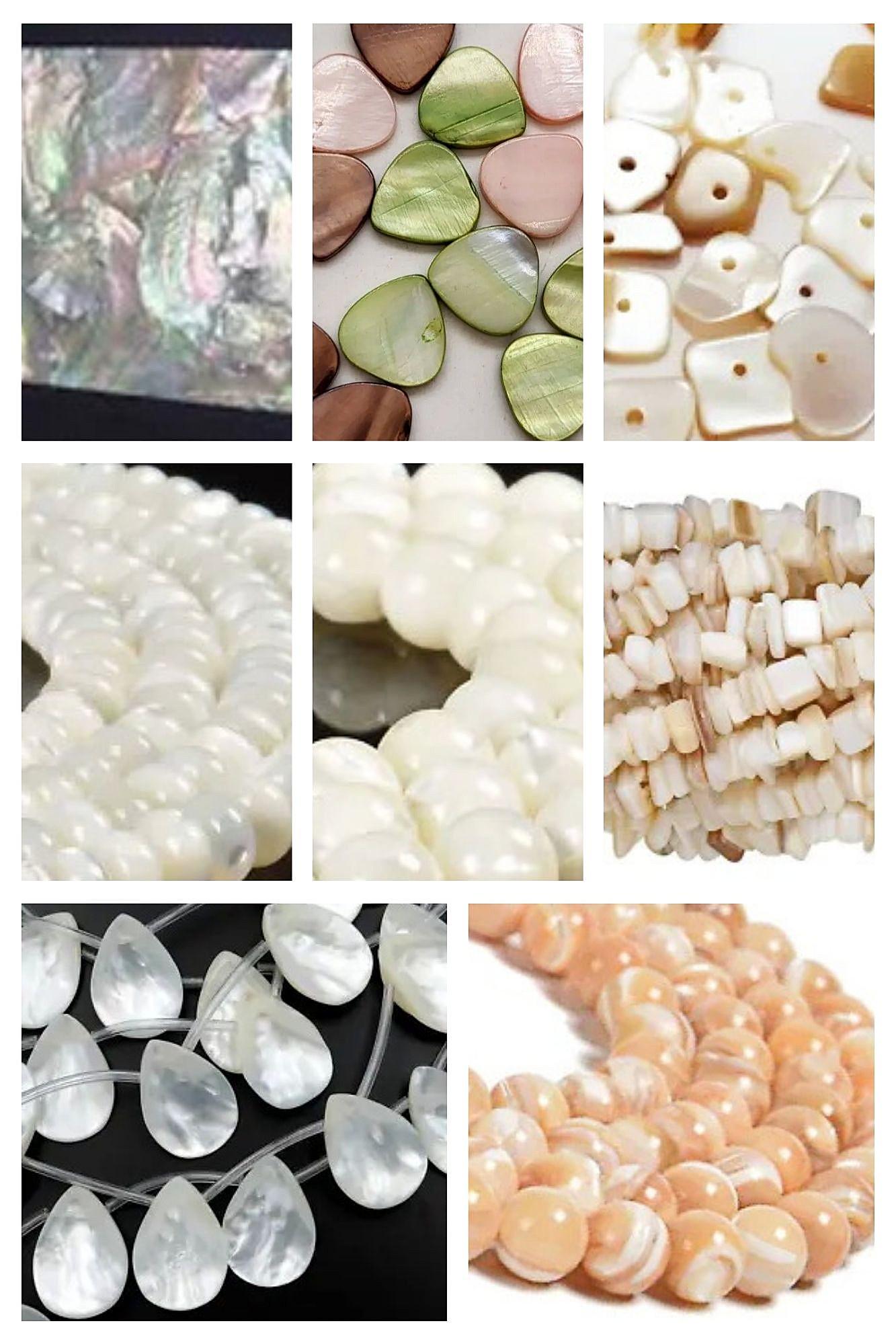
Mother of pearl is technically termed “nacre”. Expertly crafted from the inner layer of mollusk shells, mother of pearl, or nacre. Formed by crystallized mineral compounds on the inner shells of mollusks, it boasts a smooth and iridescent finish. Its interlocking platelets and silk-like proteins create a unique texture, making it a stunning addition to any piece. Saltwater oysters and abalone, along with freshwater mussels, secrete nacre along the inner walls of their shells. Discover the stunning beauty of this unexpected material hidden inside shellfish. Experience its unique texture and appearance, adding a touch of elegance to any outfit or decoration. A truly one-of-a-kind find, perfect for those seeking something extraordinary.
Obsidian
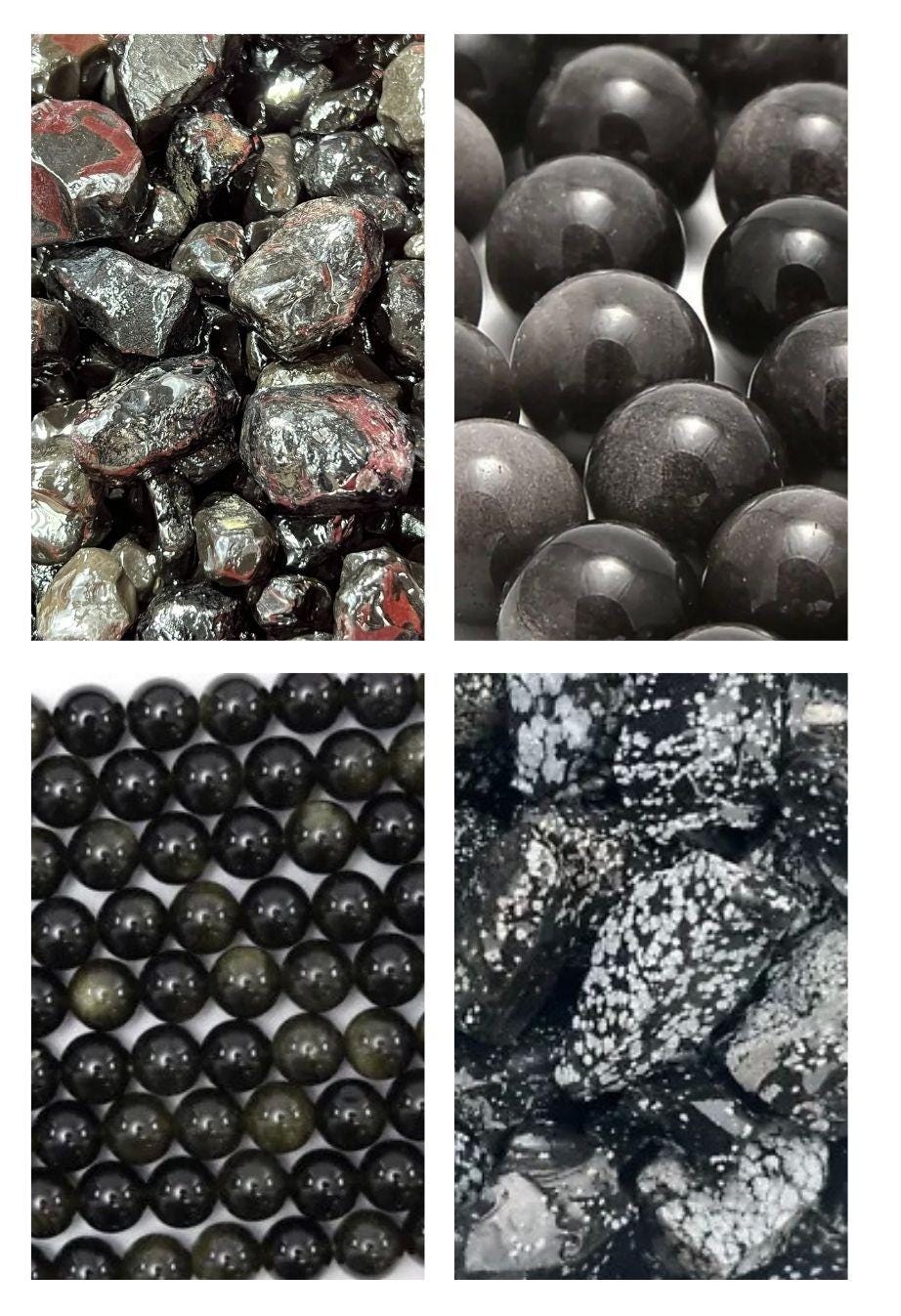
As a volcanic glass, Obsidian is formed when hot magma rises from deep within the earth and cools quickly on the surface. Its unique properties include a glassy lustre and a hardness greater than window glass. The presence of hematite and tiny gas bubbles can produce red and golden varieties.
Onyx
Onyx is a unique form of chalcedony, formed in lava cavities. Its multi-layered structure, similar to agates, creates a striking contrast between black and white. With a deep black base, this stone is known as black onyx, while sardonyx features a brown base and carnelian-onyx boasts a rich red base. Add an elegant touch to your jewelry collection with this beautiful stone.
Mohs Hardness: 6-1/2 to 7
Opal
Discover the stunning Opal gemstone, derived from the Sanskrit word upala meaning precious stone. Found in igneous or sedimentary rock, this gem is known for its unique iridescence. With the highest quality found in Australia, it's also found in locations around the world such as in Brazil, Mexico, Czech Republic, Slovakia, southern Africa and Nevada of the United States.
Mohs Hardness: 5.5–6
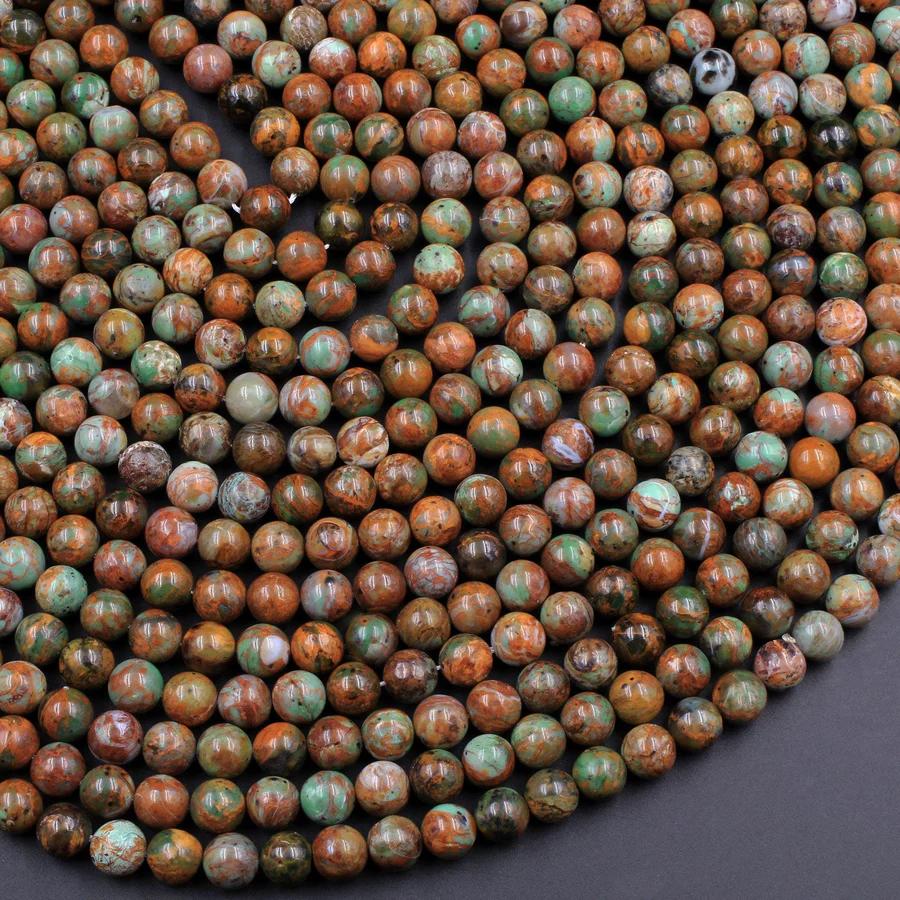
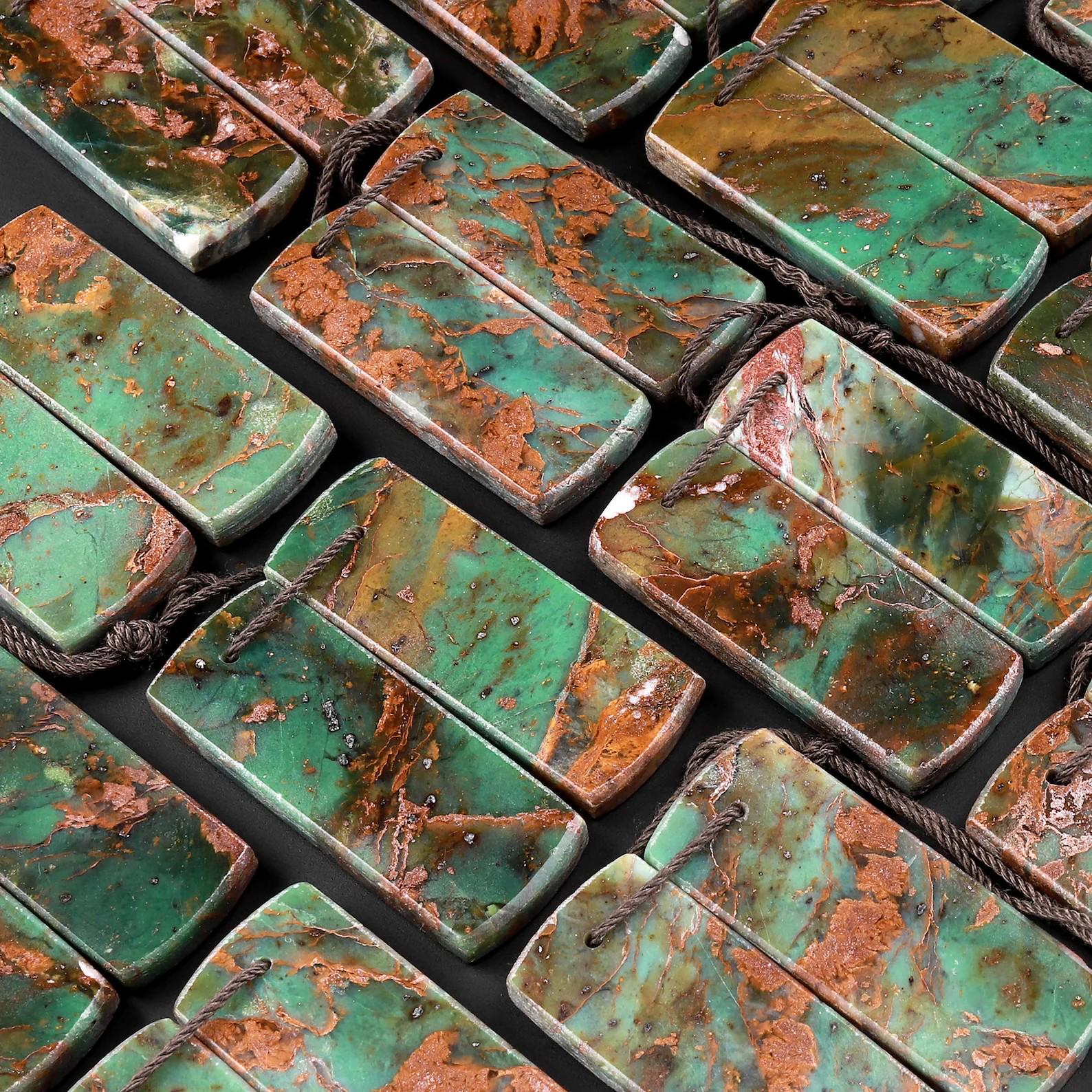
African Green Opal is a variety of common, non-precious opal primarily mined in Africa, including South Africa, Tanzania, and Madagascar. Unlike precious opals, it lacks the fire or play-of-color, featuring instead earthy, mottled shades of green with brown or black dendrites. This opal is widely used in jewelry, often fashioned into beads or cabochons. Due to its appearance, it is sometimes referred to as "African Jade," as it resembles jade in color and texture. The Mohs hardness of African Green Opal ranges from 5.5 to 6.5, making it suitable for various types of ornamental use while requiring some care to avoid scratching or damage.
Serpentine
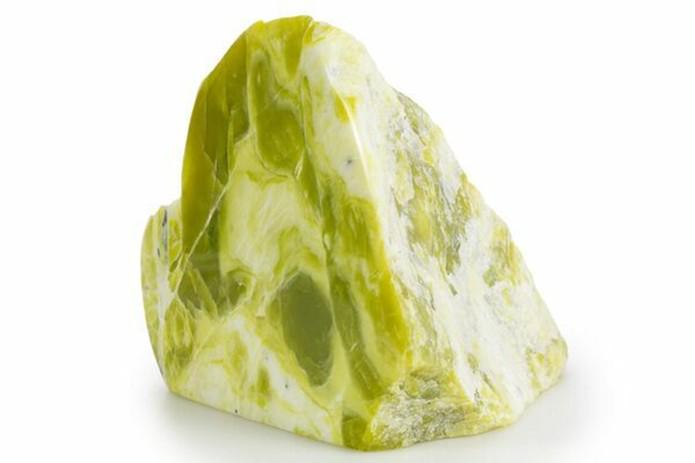
Serpentine and jade are two green minerals often confused due to their similar appearance and long history of use in art and jewelry. Both have been carved and valued for thousands of years, which adds to the mix-up between them. However, they are quite different in their mineral makeup, crystal structure, hardness, and where they come from geologically. Jade actually refers to two distinct minerals—jadeite and nephrite—each with its own properties, while serpentine is a separate group of minerals altogether. Despite these differences, their stories have intertwined throughout history, leading to frequent confusion. Understanding these distinctions helps appreciate the unique qualities of each mineral, whether admired for their beauty or studied for their geological origins.
Jade is a term that refers to two specific minerals: nephrite and jadeite, whereas serpentine is actually a group of related minerals. When it comes to hardness, jade ranks significantly higher, scoring about 6 to 7 on the Mohs scale, compared to serpentine’s softer 2.5 to 4. This means jade is much more resistant to scratches and wear. In addition to hardness, jade is famously tough, making it highly resistant to breaking. Serpentine, on the other hand, is softer and less durable. Chemically, jade is either a calcium-magnesium-iron silicate (nephrite) or a sodium-aluminum silicate (jadeite), while serpentine is a magnesium-rich silicate. Geologically, jade forms under high-pressure metamorphic conditions deep within the Earth, whereas serpentine forms through the hydration of mantle rocks in a process called serpentinization. Due to its rarity and toughness, true jade tends to be far more valuable, while serpentine is commonly used as a decorative and carving stone.
Tiger Eye
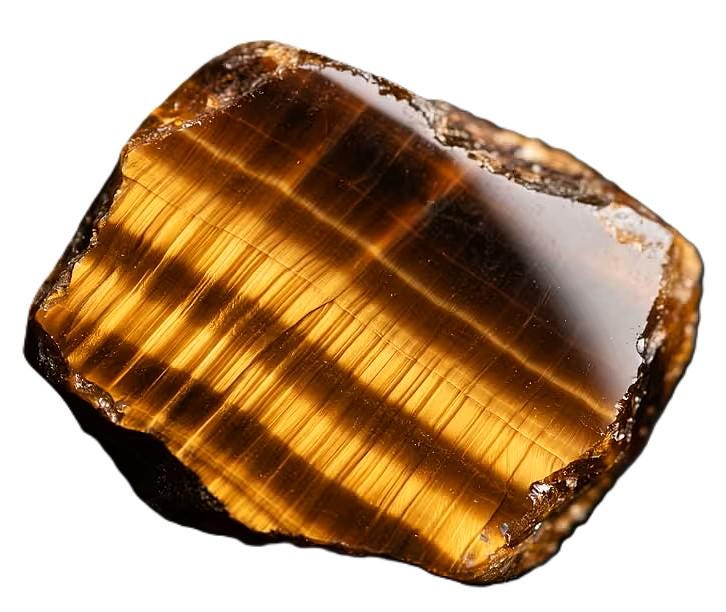
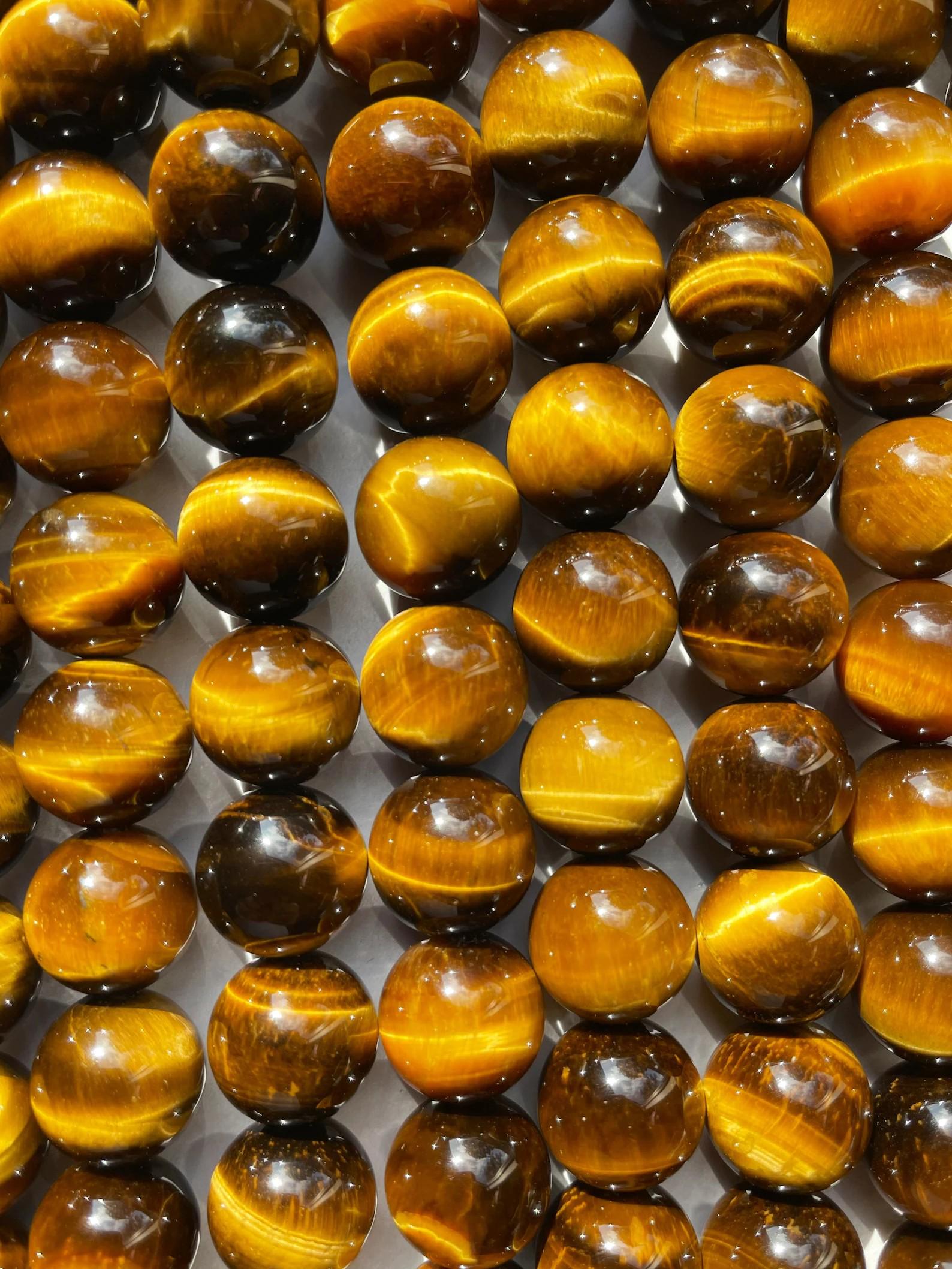
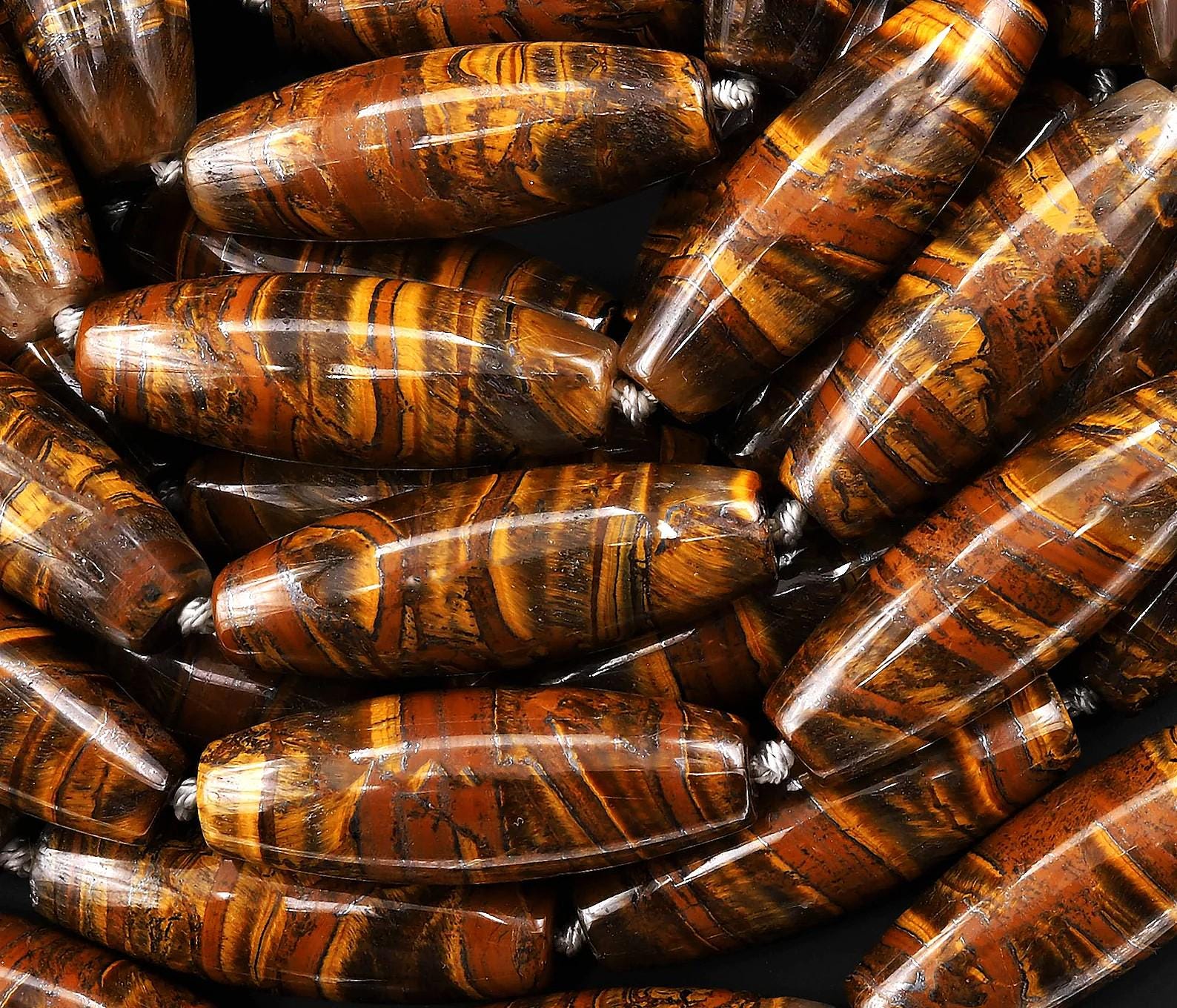
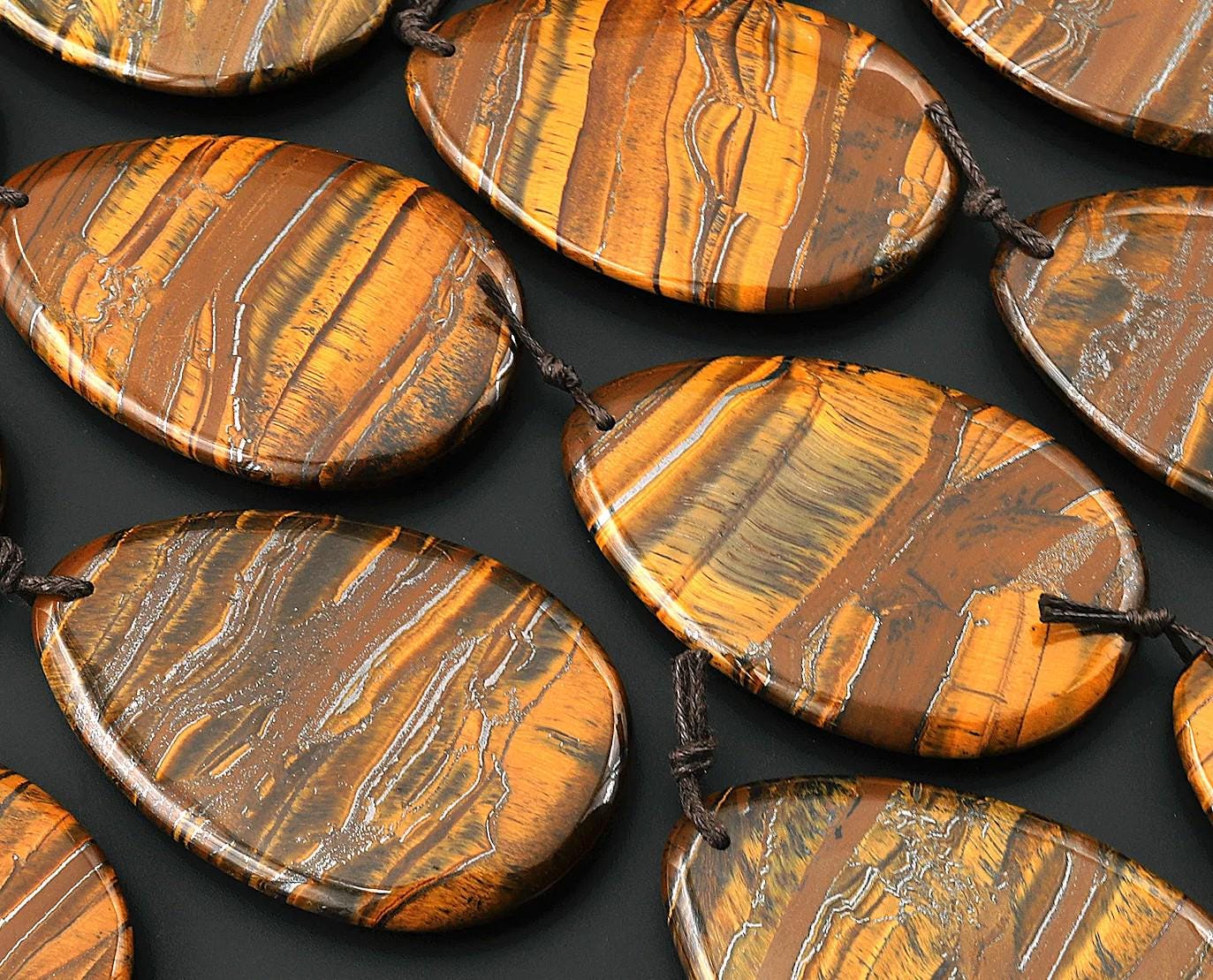
Tiger's Eye, also known as Tiger Eye, is a striking gemstone admired for its unique chatoyancy—a shimmering, light-reflecting effect. This gem displays alternating bands of golden to reddish-brown hues with a smooth, silky luster. One of its most fascinating features is the dynamic shift of light across its surface, where the gold and brown bands seem to reverse as the stone moves relative to the light source.Scientifically, Tiger's Eye is a variety of quartz. Its chatoyant effect results from fine, parallel intergrowths of quartz with altered amphibole fibers, which have transformed into limonite. This natural interplay creates the gemstone’s signature glow and depth.Primarily used for ornamental and lapidary purposes, Tiger's Eye is sourced mainly from South Africa, Australia, and China. Its captivating appearance and durability make it a popular choice for jewelry and decorative objects.
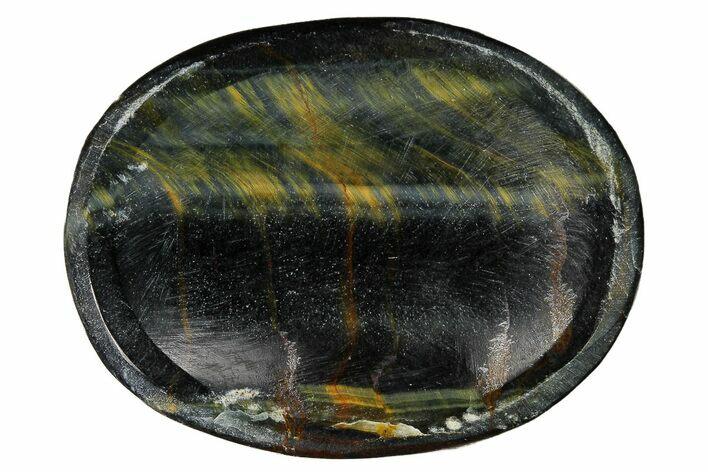
1. Blue Tiger’s Eye, also known as Hawk’s Eye or Falcon’s Eye, is a captivating variety of Tiger's Eye recognized for its silky luster and deep blue shades. This unique stone forms when crocidolite fibers, originally blue asbestos, are replaced by quartz in a process called pseudomorphism. Despite this transformation, the stone retains its fibrous structure, creating a distinctive chatoyant or “cat’s-eye” effect—a shimmering band of light that seems to move as the stone is turned.Primarily found in South Africa and Western Australia, Blue Tiger’s Eye exhibits colors ranging from deep navy to steel blue, often accented by streaks of gray, gold, or green. When polished, it shines with a glassy finish and a dynamic light band that adds impressive depth and motion. Popular among collectors and lapidary artists, it is commonly shaped into cabochons, beads, or tumbled stones, each piece echoing the tranquil beauty of stormy skies or the graceful wings of a hawk in flight.
2. Red Tiger’s Eye, also known as “Dragon’s Eye,” is a captivating variety of the classic golden Tiger's Eye. This stone is prized for its rich reddish-brown hues and silky luster, which come from a unique formation process where crocidolite fibers are replaced by quartz and then oxidized or heat-treated. The result is a warm, fiery color palette ranging from deep mahogany to bright copper-red, often accented with subtle golden undertones.When polished, Red Tiger’s Eye reveals a mesmerizing chatoyancy—a shimmering, linear band of light that shifts as the stone moves, giving it a lively, glowing effect. Mainly sourced from South Africa and Western Australia, this stone is a favorite choice for cabochons, beads, and decorative carvings. Each piece carries the dynamic energy and natural beauty of traditional Tiger's Eye, but with a bold, passionate twist that makes it truly stand out.
Tiger Iron
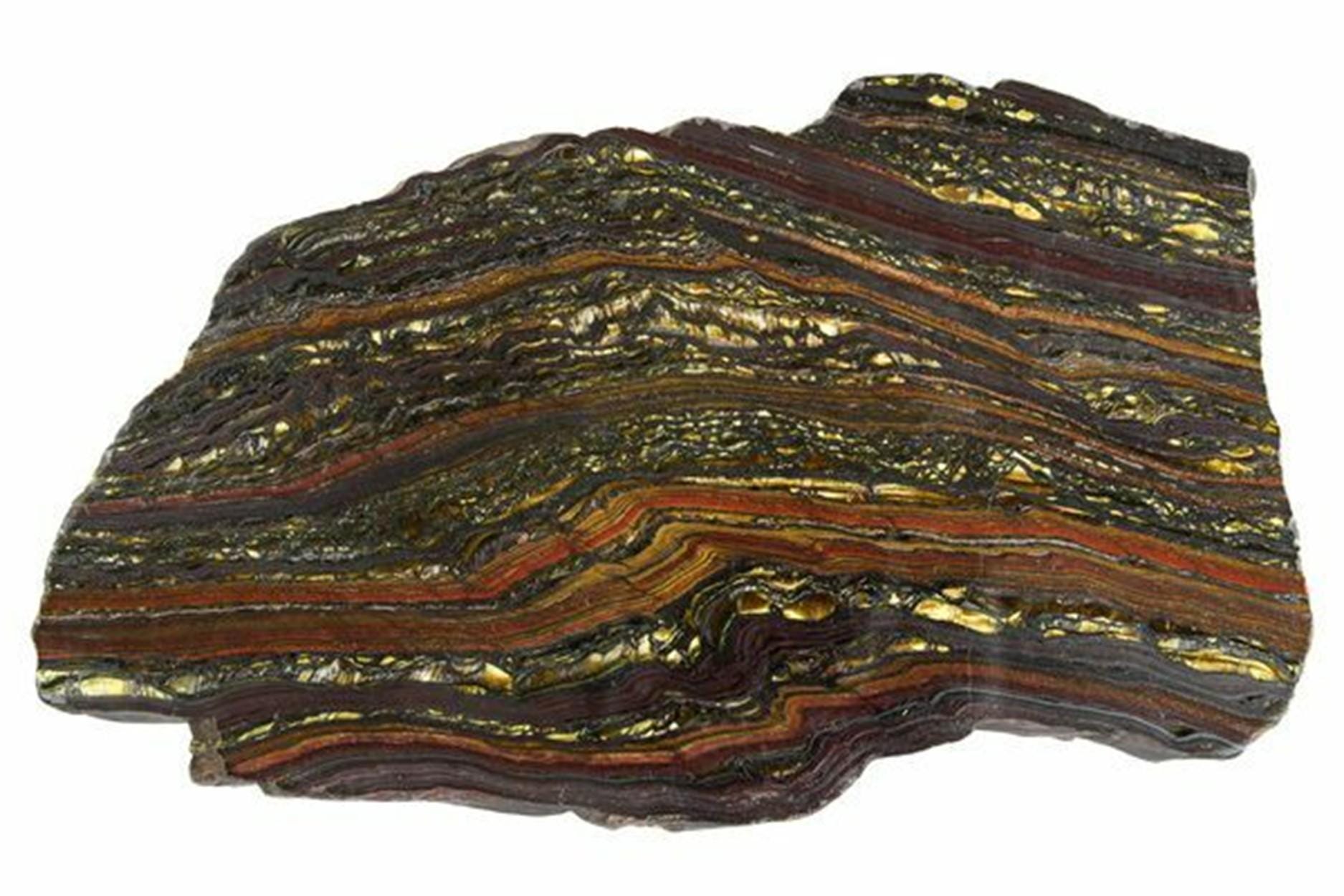
Tiger iron is a fascinating stone composed of three main minerals: tiger’s eye (a golden, shimmering quartz), red jasper (an opaque, earthy mineral), and hematite (a metallic iron oxide with a reflective luster). These materials appear in alternating, often tightly folded layers, creating a striking combination of silky shine, deep color, and metallic gleam all in one rock. Unlike tiger’s eye, which forms when quartz replaces crocidolite fibers, tiger iron’s layers come from the original sedimentary deposits of iron-rich minerals that later experienced metamorphism—heat and pressure transforming their structure. The tiger’s eye within tiger iron forms the same way as pure tiger’s eye but remains intertwined with jasper and hematite, giving tiger iron its distinctive banded appearance and rich visual texture.
Tiger Iron -Marra Mamba
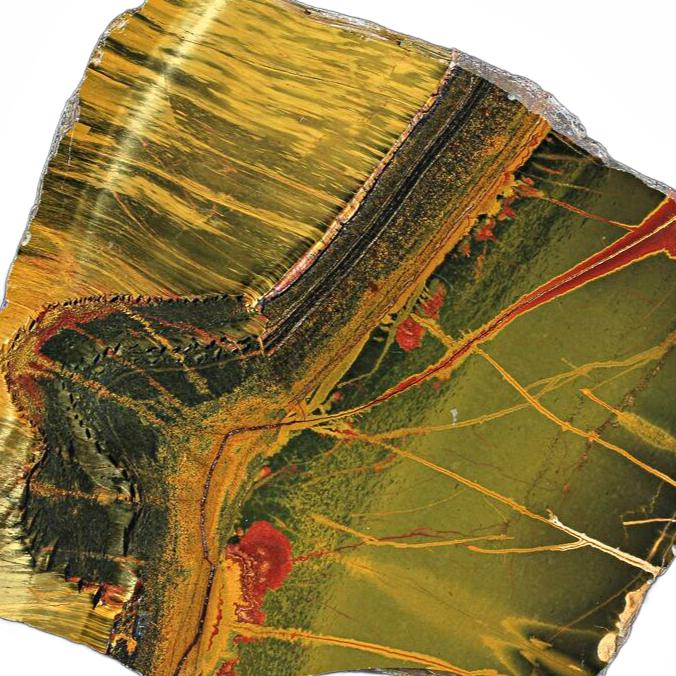
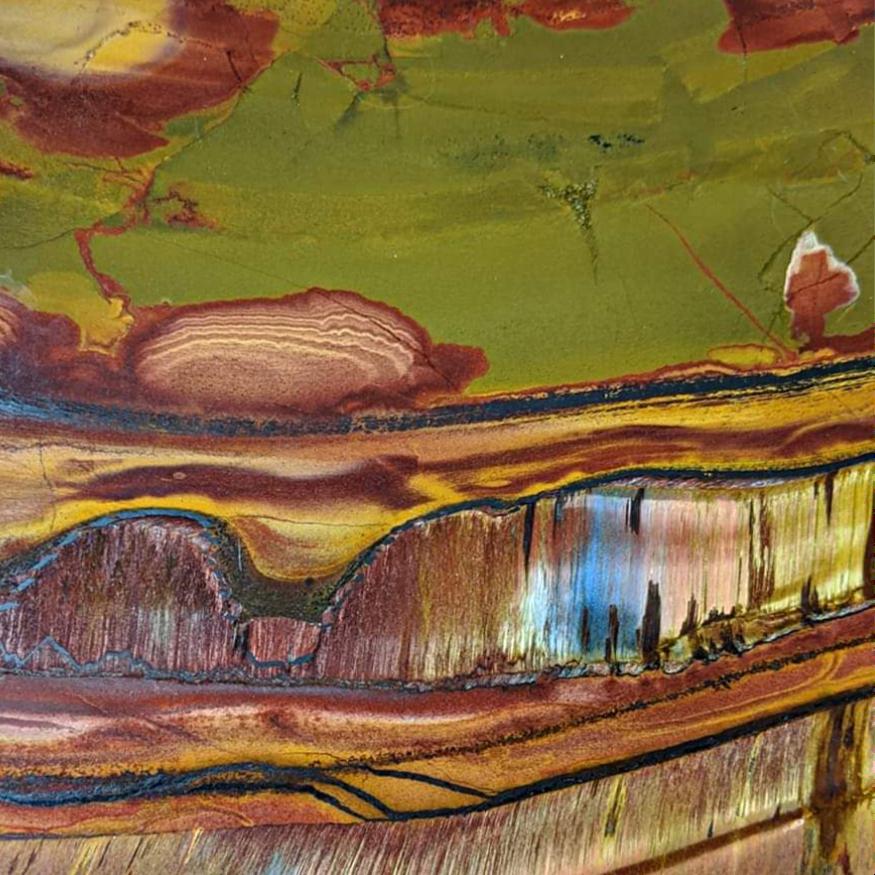
Marra Mamba and Tiger Iron are both striking ironstone varieties, but they differ in several notable ways. Marra Mamba is famous for its rare “kaleidoscope” of colors, showcasing blues, reds, greens, and deep golds. In contrast, traditional Tiger Iron features a more uniform palette dominated by golden tiger’s eye, black hematite, and red jasper, often arranged in bold, striped bands. Origin-wise, true Marra Mamba comes exclusively from the Mount Brockman area of Western Australia’s Hamersley Ranges, where deposits have become scarce. Tiger Iron, however, is found in multiple locations across Australia and South Africa, making it more common. When it comes to rarity, Marra Mamba is considered exceptionally rare, prized by collectors and enthusiasts. Its appearance is also unique, often described as “scenic” or “landscape-like,” with complex fibrous patterns resembling a sunset over a valley, whereas Tiger Iron usually appears more band-heavy and less intricate.